

Today’s electrical panels are increasingly compact, high power and space efficient. Smaller enclosures lead to difficult and complex routing of traditional rigid connections, as more circuit breakers, contactors, power electronics and protection devices are installed within them.
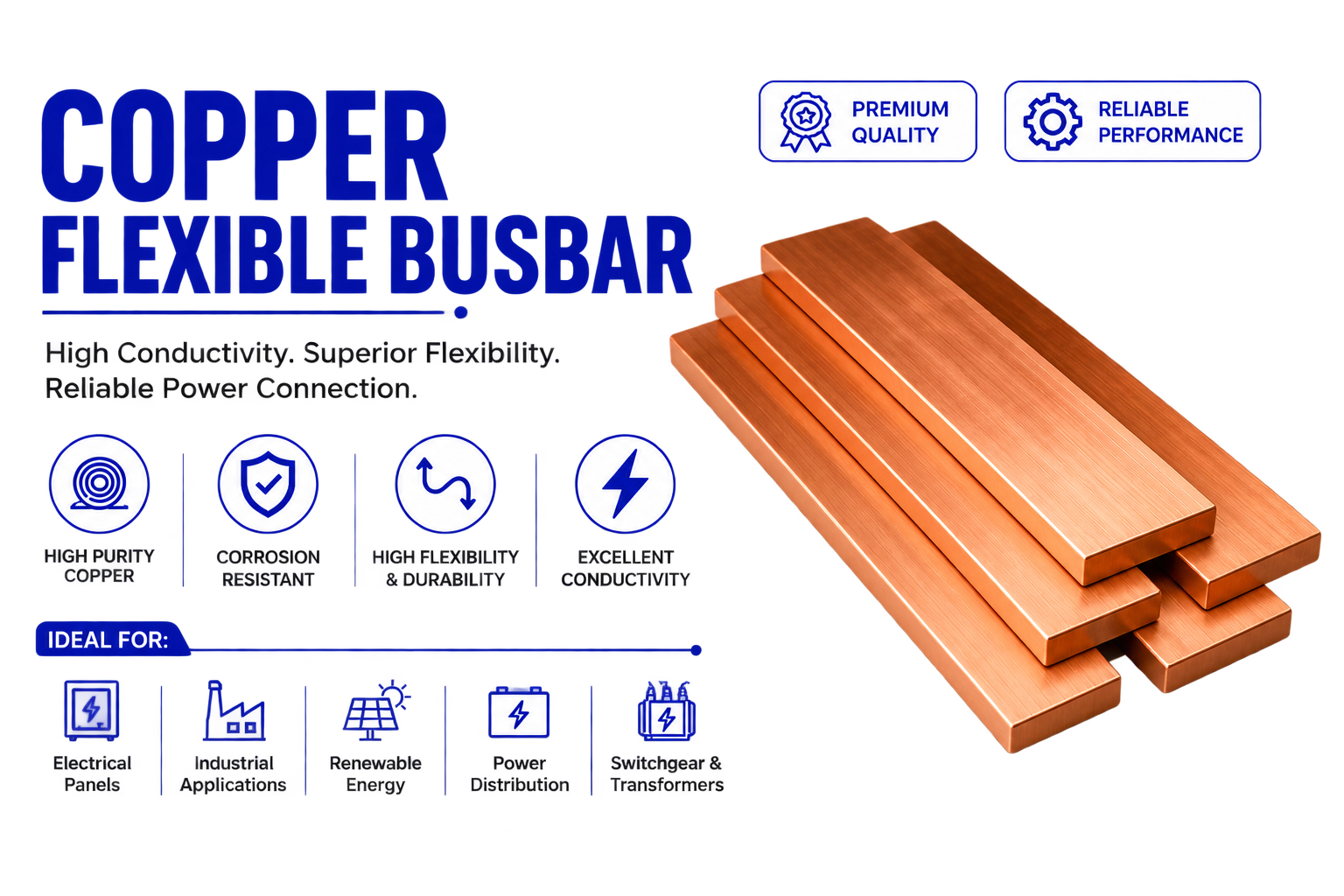
These applications are served by copper flexible busbars. They have high electrical conductivity similar to copper, but are flexible enough to be routed through tight spaces and around electrical components.
Copper flexible busbars can make electrical connections easier while maximizing available space, whether it’s in switchgear and distribution panels, industrial control cabinets, battery systems, UPS equipment or power-conversion systems.
Why Are Copper Flexible Busbars Useful in Compact Panels?
The most difficult issue with compact electrical panels is the lack of installation space.
This allows components to be packed very densely together with very little space between for rigid conductors and traditional cable bends.
The flexible copper busbar can be bent and guided to fit in available space to make the electrical connections shorter and more functional.
| Specification | Details |
|---|---|
| Material | High-Conductivity Copper |
| Copper Grade | ETP / EC Grade |
| Construction | Flexible Copper Braid / Laminated Copper Foils |
| Finish | Bare Copper / Tinned Copper |
| Flexibility | Excellent |
How to Choose Copper Flexible Busbars for Compact Panels
These are just some factors to take into account when choosing copper flexible busbars.
Current Rating:
Calculate continuous and peak currents.
Voltage:
Verify system voltage and insulation, clearance and creepage requirements.
Dimensions:
Consider:
Temperature:
Calculate ambient temperature, operating temperature and allowable temperature rise.
Flexibility:
Find the bending and movement capability required.
Installation Space:
Determine how much room there is for the routing and where it will connect.
Environment:
Consider:
Frequently Asked Questions
Neither is universally better. Tinned copper can offer better surface corrosion resistance, while bare copper provides excellent conductivity and can be suitable for protected environments.