

Copper jumpers are used in flanges primarily to maintain electrical continuity and provide reliable bonding between two sections of equipment or piping. Although a metal flange may appear electrically conductive, bolted joints can sometimes have electrical resistance because of coatings, corrosion, gaskets, paint, or other insulating materials.
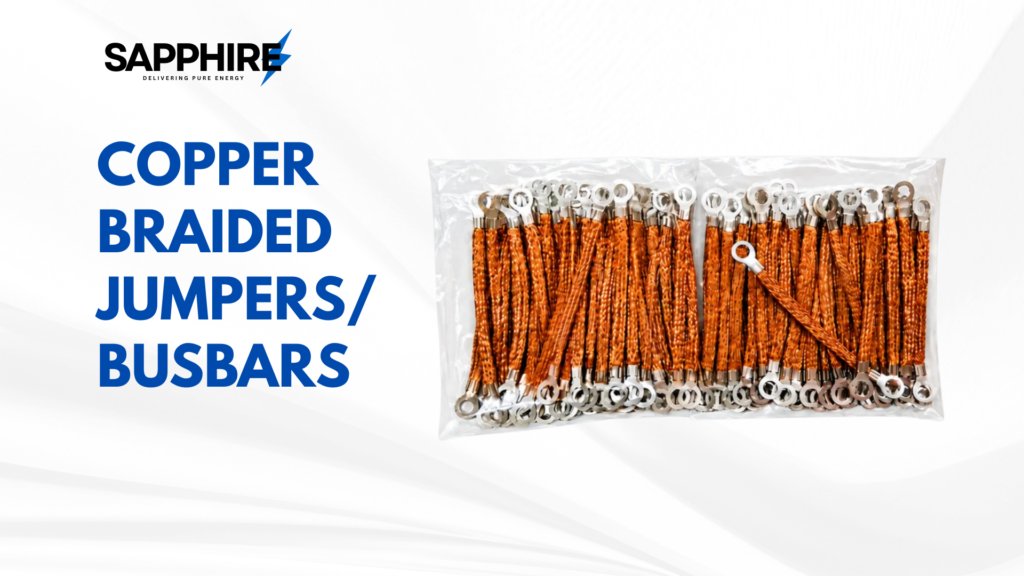
A copper bonding jumper can provide a deliberate conductive path across the flange connection. This helps reduce electrical potential differences between connected sections and can be important in grounding, bonding, static electricity control, and certain industrial piping systems.
What Is a Copper Jumpers Used in a Flange?
A copper jumpers is a simple but very important conductive link used across a flanged joint to ensure proper electrical continuity. In real-world installations, a copper jumpers is fitted between the two metal sections on either side of the flange using suitable terminals, lugs, or other approved connection methods so that the connection remains secure and reliable.
The main purpose of a copper jumpers for flange applications is to create a deliberate and low-resistance electrical path, especially when the flange connection alone may not guarantee consistent electrical continuity due to gaskets, coatings, corrosion, or surface irregularities.
| Specification | Copper Jumpers | Copper Flanges |
|---|---|---|
| Main Purpose | Flexible electrical connection | Mechanical pipe connection |
| Material | High-conductivity copper | Copper / copper alloy |
| Typical Use | Switchgear, transformers, busbars, batteries | Copper piping, plumbing, HVAC |
| Primary Function | Electrical conductivity | Pipe joining & sealing |
| Common Applications | Electrical power systems | Piping & fluid systems |
Why Are Copper Jumpers Used in Flanges?
1. To Maintain Electrical Continuity
The primary purpose of a flange jumper is to provide electrical continuity between two sections separated by a flange connection.
A flange joint may contain:
2. To Provide Electrical Bonding
Bonding connects conductive components so they remain at substantially the same electrical potential.
A copper jumper can bond two flange sections together and reduce the possibility of an unwanted voltage difference developing between them.
This can be particularly relevant in industrial environments containing extensive metallic piping and equipment.
3. To Support Grounding Systems
In some installations, flange bonding jumpers form part of an overall grounding or bonding system.
The jumper helps provide a conductive connection between metallic components so that electrical faults or unwanted electrical charges can be managed through the intended grounding system.
4. To Bypass Insulating Flange Gaskets
Some flange systems use insulating gaskets or insulating kits to electrically isolate one section of piping from another.
In such situations, electrical continuity across the flange is intentionally interrupted.
Where bonding across that isolation is required by the system design, an appropriate bonding connection may be installed.
This is one reason flange jumpers are important in certain industrial piping and equipment installations.
5. To Reduce Static Electricity
Flowing fluids, gases, powders, or other materials can generate static electrical charges under certain conditions.
A properly designed bonding system can help provide a controlled conductive path for electrical charges.
Copper jumpers may therefore be used as part of bonding arrangements intended to control static electricity.
The exact requirements depend on the fluid, equipment, process conditions, hazardous-area classification, and applicable standards.
6. To Accommodate Vibration and Movement
Industrial piping and equipment can experience vibration, thermal expansion, and mechanical movement.
A rigid electrical connection may experience mechanical stress under these conditions.
Flexible copper jumpers can accommodate small movements while maintaining the intended conductive connection.
Braided copper jumpers are particularly useful when flexibility is important.
Frequently Asked Questions
Copper is commonly used because it has high electrical conductivity and can be manufactured into flexible braided or stranded constructions suitable for bonding applications.
No. Not every flange requires a bonding jumper. The requirement depends on the piping system, flange design, gasket type, electrical bonding requirements, hazardous-area considerations, and applicable standards.