

Bare copper braid and tinned copper braid are two popular types of copper braid used for electrical grounding, bonding, flexible connections and industrial applications. Both are constructed with extremely conductive copper strands, but are provided with different surface finishes yielding different performance characteristics.
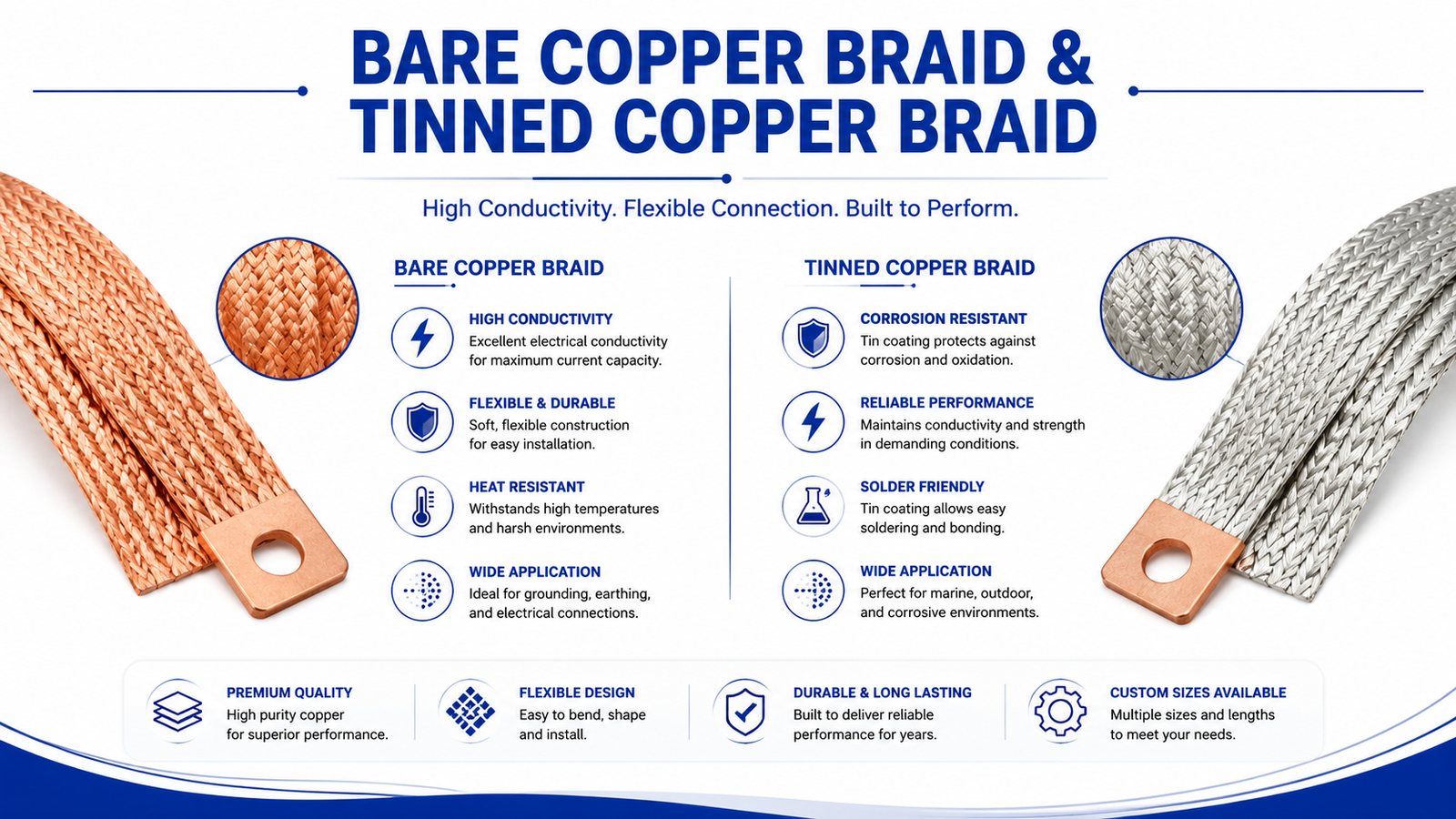
So, what is better? Bare copper braid or tinned copper braid? The solution will vary with the environment, application, corrosion resistance required, electrical performance and budget.
This guide will involve comparing the bare copper braid with the tinned copper braid to select the appropriate braid for the job.
What Is Bare Copper Braid?
Bare copper braid is made by weaving or braiding bare copper wires into a flexible conductive structure. The copper is exposed so this enables good electrical conductivity and current flow.
The common uses for bare copper braid are:
| Specification | Tinned Copper Braid | Bare Copper Braid |
|---|---|---|
| Material | Copper with tin coating | High-conductivity copper |
| Surface Finish | Tin-plated | Uncoated copper |
| Corrosion Resistance | Excellent | Moderate |
| Conductivity | Very high | Excellent |
| Best For | Moisture, outdoor & harsh environments | Dry indoor applications |
| Applications | Grounding, bonding, jumpers & electrical connections | Earthing, bonding, switchgear & transformers |
It is highly conductive one of the main advantages. However, due to the fact that the copper surface is exposed to the surrounding environment, it can oxidize and discolor over time, especially in humid or corrosive environments.
What Is Tinned Copper Braid?
Tinned copper braid is copper braid that is covered with a thin coating of tin. The tin coating offers extra protection to the copper surface without compromising its electrical conductivity.
Copper braid tinned can be chosen for situations where the braid could be subjected to:
Tinned Copper Braid is a popular choice for tinned copper braid applications because the tin coating prevents the underlying copper from oxidizing and corroding.
Which Has Better Electrical Conductivity?
Bare is slightly more conductive as the current flows directly through copper and not an additional coating.
But this difference is typically not enough to make bare copper a no-brainer for all situations.
Tinned copper braid is still capable of providing excellent electrical performance and offers enhanced surface protection.
When properly sized, both types can be effective for many electrical grounding and bonding applications.
Which Has Better Corrosion Resistance?
One of the largest distinctions between the two of them is this.
Tinned copper braid tends to be more corrosion resistant since the outer layer of tin provides a protective barrier against corrosion for the copper strands.
Under corrosive conditions or when exposed to air and moisture, bare copper can oxidize over time. This may not be a big issue in a clean indoor and controlled environment. However, for outdoor, marine or industrial applications, corrosion resistance is much more significant.
Tinned copper braid may be a better option if the braid is to be exposed to moisture or corrosive conditions.
Which Is Better: Bare Copper Braid or Tinned Copper Braid?
There is no one magic winner.
If you select Bare Copper Braid:
If you choose Tinned Copper Braid:
Frequently Asked Questions (FAQs)
Both can be suitable for grounding. Bare copper is often appropriate for dry indoor installations, while tinned copper is a strong choice for humid, outdoor, or corrosion-prone environments.
Not always. Tinned copper braid offers better protection against oxidation and corrosion, while bare copper generally provides slightly higher conductivity and lower cost. The best option depends on the application and environment.