

Aluminium busbars for switchgear and power distribution are widely used where electrical systems require efficient current distribution combined with lower conductor weight. Aluminium offers good electrical conductivity at a much lower density than copper, making it particularly useful for large electrical conductors and power-distribution assemblies.
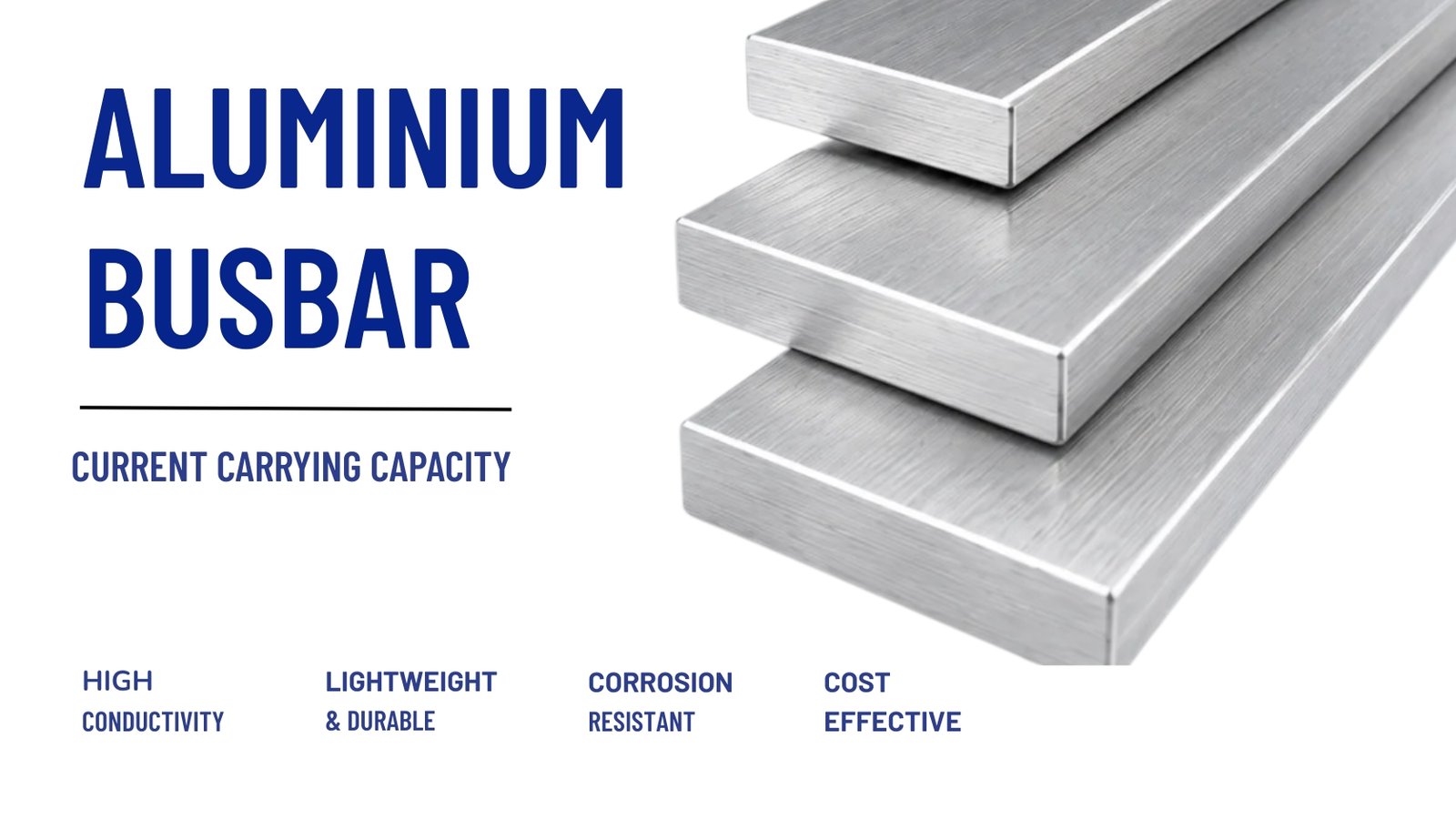
In switchgear, aluminium busbars can connect incoming supplies, circuit breakers, feeders, and distribution sections. They are also used in switchboards, electrical panels, busducts, transformers, industrial facilities, renewable-energy systems, and large power-distribution networks.
Although aluminium has lower electrical conductivity than copper, an appropriately sized aluminium busbar can provide reliable electrical performance. Proper attention must be given to cross-sectional area, temperature rise, connections, surface treatment, mechanical support, and installation conditions.
Why Are Aluminium Busbars Used in Switchgear
Switchgear requires reliable electrical connections between power sources and switching or protection devices.
Aluminium busbars for switchgear can provide:
They can be used where the switchgear design provides enough space for the required aluminium conductor dimensions.
| Feature | Aluminium Busbar | Copper Busbar |
|---|---|---|
| Electrical conductivity | Lower | Higher |
| Density | Much lower | Higher |
| Weight | Lower | Higher |
| Required cross-section | Generally larger | Generally smaller |
| Compactness | Moderate | Excellent |
| Large power distribution | Excellent | Excellent |
How to Choose Aluminium Busbars for Switchgear
Before specifying aluminium busbars for switchgear and power distribution, consider:
Electrical Requirements:
Thermal Requirements:
Mechanical Requirements:
Connection Requirements:
Frequently Asked Questions
Yes. Properly designed aluminium busbars can be used in suitable low-voltage switchgear, switchboards, distribution panels, and other electrical assemblies.