

In the modern electrical system which is concerned with efficient power transmission, compaction and electrical isolation, insulated copper busbars play a significant role. They are made up of two materials: a conductive component which ensures good conductivity and an insulating one to prevent accidental contact or unwanted electrical faults that would affect the conductive surfaces.
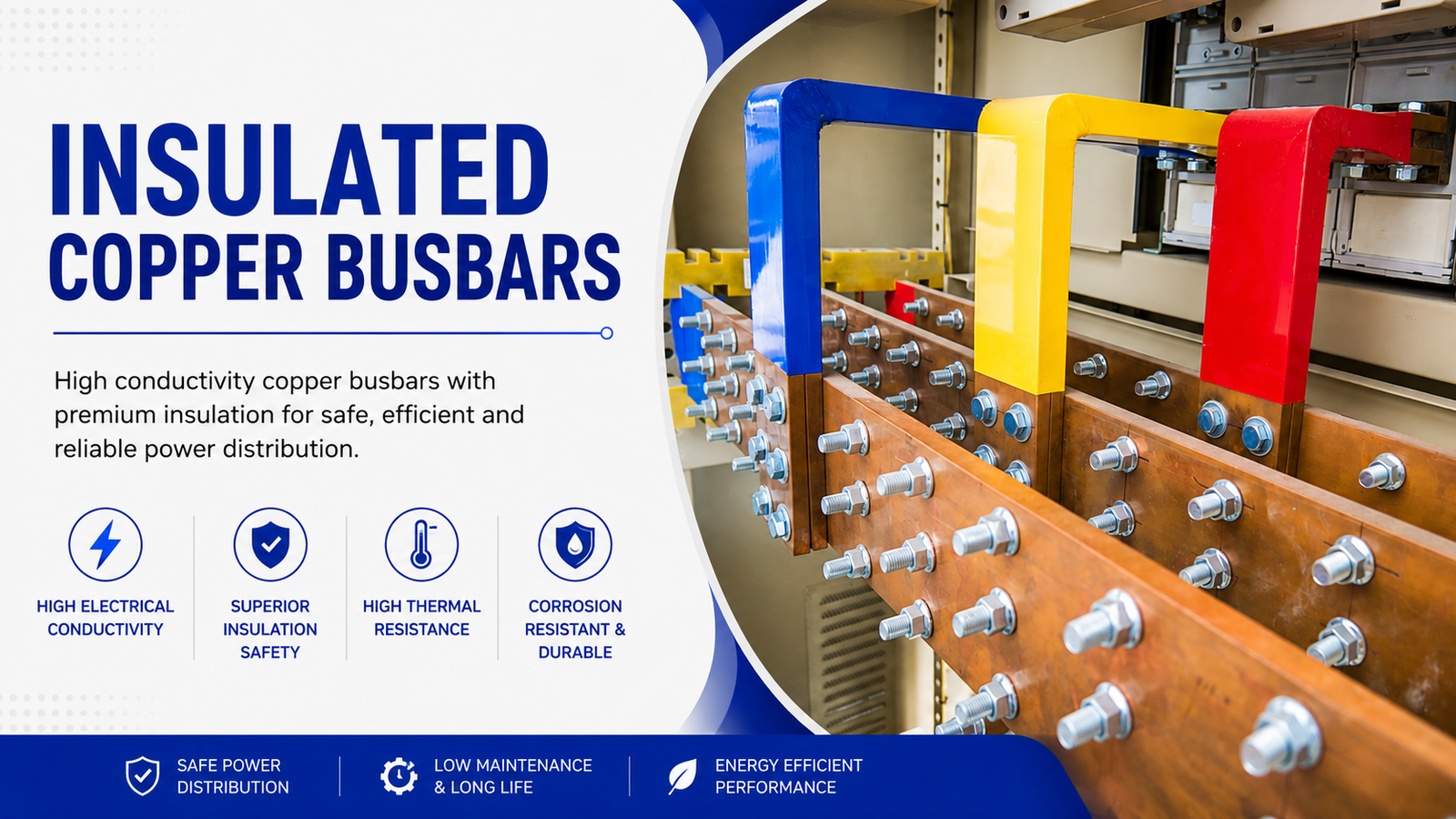
In electrical panels and switchgear, insulated copper busbar provides a more efficient and reliable electrical path. In other applications such as EV batteries, solar inverters, UPS, transformers, data centers, industrial equipment, battery energy storage systems, insulated copper busbar offers a more efficient and reliable electrical path.
Busbars can offer a well-defined and less bulky approach to transmitting large electrical currents in the interior of equipment, as opposed to traditional cable wiring.
What Are Insulated Copper Busbars
Copper busbar insulated is the copper conductor covered with electric insulating material.
The primary current path is through the copper and the electrical separation is provided by the insulation.
A standard insulated busbar can be made up of:
The materials and structures of the insulation are chosen based on the voltage, temperature, environmental conditions, flexibility and mechanical requirements of the application.
| Feature | Insulated Copper Busbar | Copper Cable |
|---|---|---|
| Conductor | Copper | Copper |
| Insulation | Yes | Yes |
| Shape | Flat/custom | Usually round |
| High-current applications | Excellent | Excellent |
| Compact panel layouts | Excellent | Good |
| Routing flexibility | Moderate | Excellent |
How to Select an Insulated Copper Busbar
Prior to selecting an insulated copper busbar, consider:
Electrical Requirements:
Mechanical Requirements:
Insulation Requirements:
Environmental Requirements:
Frequently Asked Questions
In suitable applications, yes. Busbars are particularly useful for compact, high-current connections, while cables remain advantageous where flexible routing over longer distances is needed.