

Tinned copper busbar specifications dictate the surface, dimensional, mechanical and electrical properties needed to ensure the busbar functions properly within an electrical system. These specifications usually contain the grade of copper, width, thickness, length, cross sectional area, plating finish of tin, current rating, temperature rating and applicable standards.
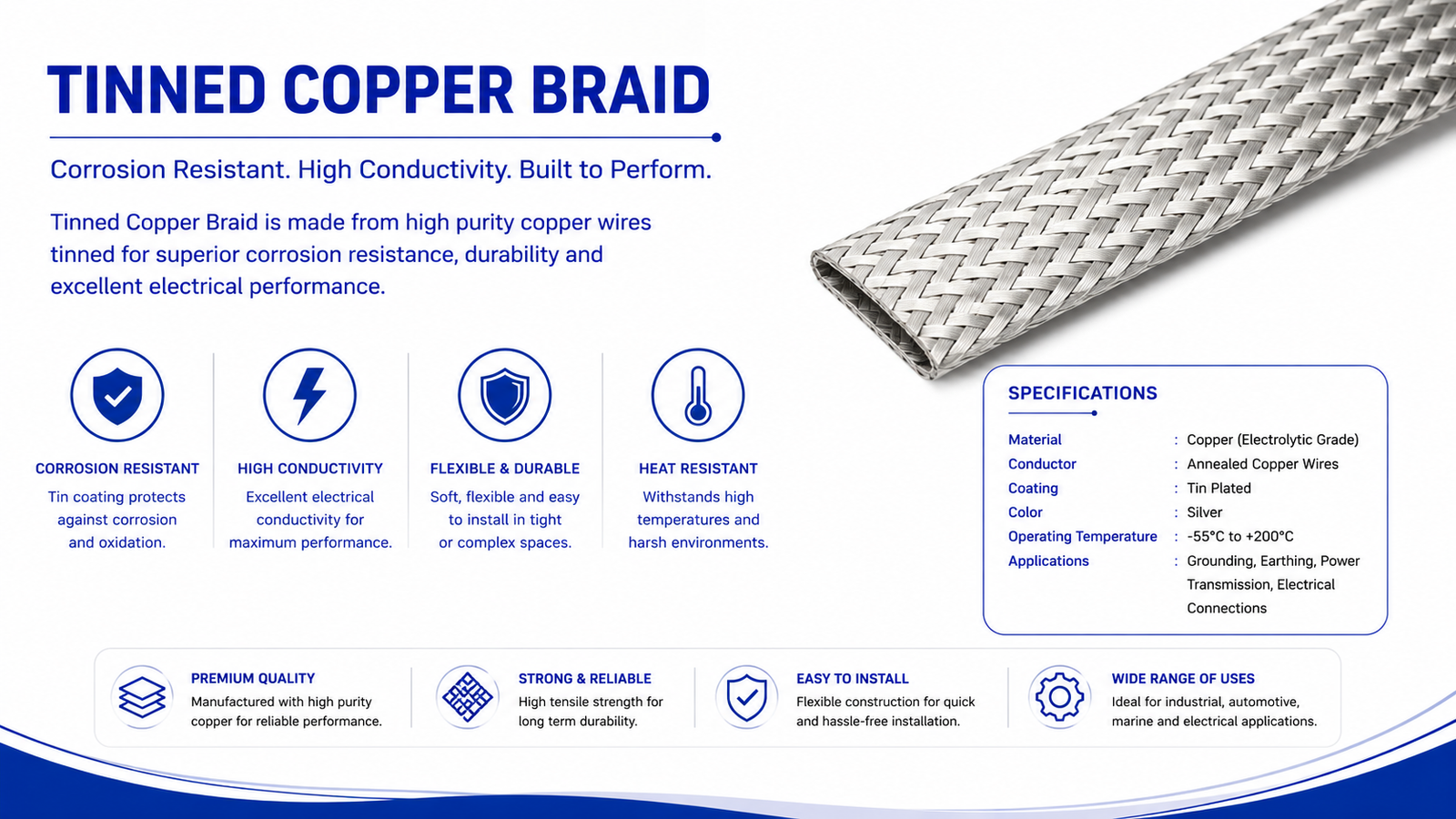
Copper Conductivity busbars are commonly employed in electrical panels, switchgears, battery systems, renewable-energy equipment, power distribution systems, EV equipment and industrial applications that demand copper conductivity and further surface protection.
The exact specification should be designed based on the actual standards of the application, the current, voltage, temperature, environment, connection mode and connection method.
Tinned Copper Busbar Specifications
The following are common specification ranges, not a universal standard. Manufacturers can produce custom dimensions according to project requirements.
| Specification | Typical Range / Option |
|---|---|
| Material | High-conductivity copper |
| Common copper grade | ETP / Cu-ETP / C11000 |
| Shape | Rectangular / flat / custom |
| Thickness | Approximately 1–20+ mm |
| Width | Approximately 10–250+ mm |
| Length | Custom / standard lengths |
| Surface | Tin plated |
| Tin coating | Application-dependent |
| Cross-sectional area | Based on width × thickness |
Standards for Tinned Copper Busbars
The appropriate standard is used for the material, product structure, electrical parts and application.
The following are commonly cited standards for copper busbar specifications:
EN 13601 – copper and copper alloys for electrical purposes
ASTM B187 copper bus, bar, rod and shapes
The national standard for copper and copper alloy plates, sheets and strips is IS 191.
The IEC 61439 standard covers low-voltage switchgear and controlgear assemblies.IEC 61439 – low-voltage switchgear and controlgear assemblies.
For instance, the Indian commercial specifications include IS 191 and ASTM/EN standards for copper busbars, and IEC 61439 applies to the design and testing of assembled low-voltage switchgear, not to a tinned-busbar of universal size.
Tinned Copper Busbar Applications
Tinned copper busbars are used in:
Frequently Asked Questions
Sizes vary by manufacturer. Commercial products can range from relatively narrow and thin bars to large power-distribution bars, with custom dimensions also available.