

Flexible insulated copper busbars provide the utility properties of copper including electrical conductivity, mechanical flexibility and electrical insulation. They are intended for use in electrical connections where a normal rigid busbar or cable might not meet the necessary combination of high current rating, compactness, flexibility and protection.
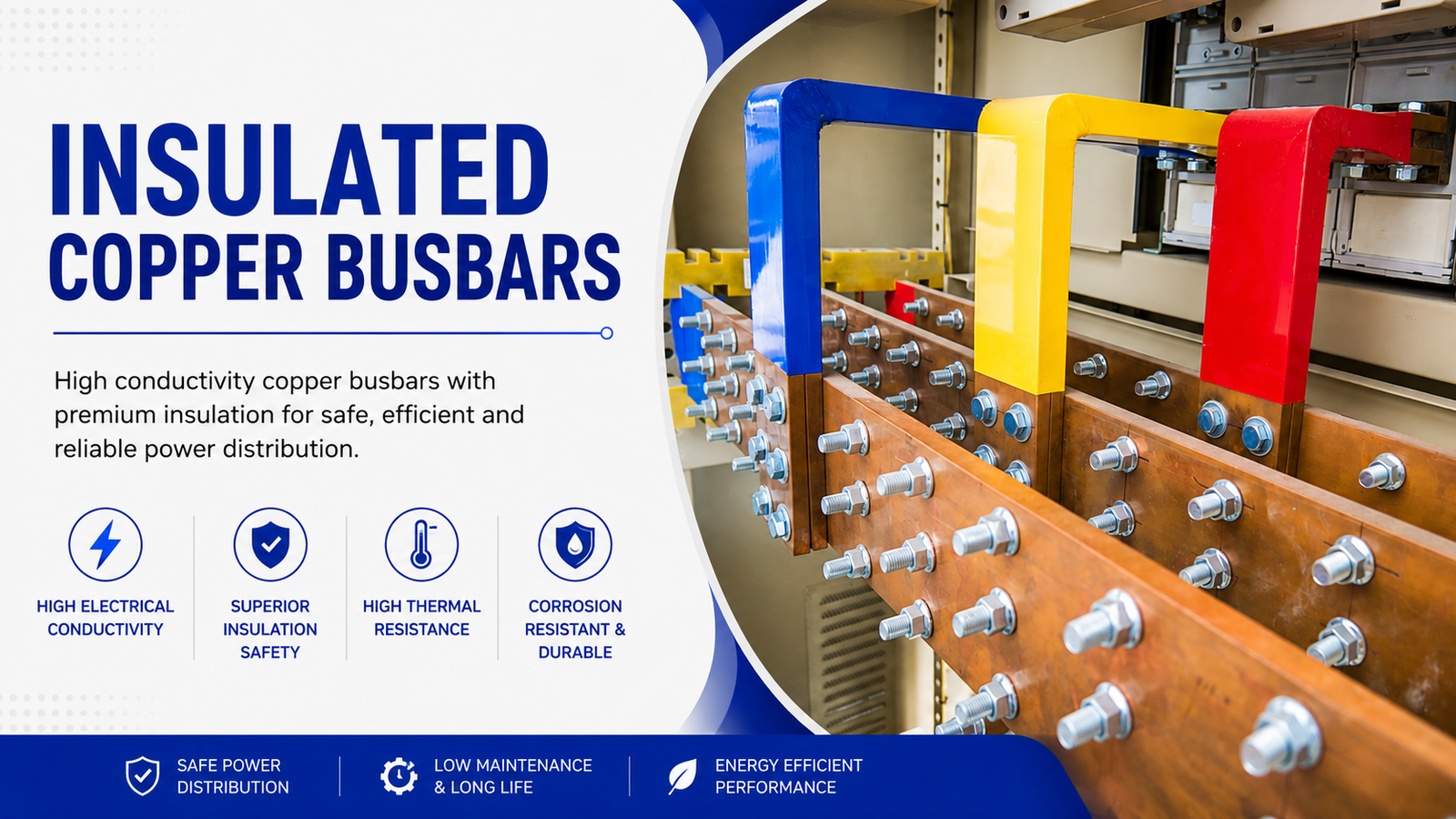
They are being widely employed in battery system, EV power system, switchgear, electrical panel, inverter, transformer, renewable energy and power distribution assembly.
Flexible Copper Busbar designs are not rigid, but allow for limited movement, vibration, thermal expansion, and installation tolerances. The insulation creates an extra protective layer between conductive copper layers to enhance electrical isolation and avoid possible contact.
What Are Flexible Insulated Copper Busbars
A flexible insulated copper busbar is a flexible electrical conductor consisting of several layers (or strands) of copper, which is insulated by a layer or surrounded by an insulating material.
The typical construction could include: The layers of copper → conduction of high current electric. Even when the structure is built, flexibility will be provided so that it can be moved around or bent. Insulation → Provides electrical isolation and protection
Depending on the application, flexible insulated busbars may be manufactured using:
The other insulating materials that can be applied to a specific application are such as animal fur, plant fiber, or wood.
Key Advantages of Flexible Insulated Copper Busbars
The major advantages include:
| Feature | Flexible Insulated Copper Busbar | Flexible Copper Cable |
|---|---|---|
| Current capacity | High when properly sized | High |
| Electrical resistance | Low | Depends on conductor |
| Shape | Flat/custom | Round |
| Space utilization | Excellent in compact layouts | Flexible routing |
| Bending | Controlled bending | Highly flexible |
| Heat dissipation | Depends on design | Depends on insulation/construction |
How to Choose Flexible Insulated Copper Busbars
Here are some questions you should ask yourself when choosing a product:
1. Determine Current
Determine the current requirements continuously and at peak.
2. Determine Voltage
Choose the type of insulation that is appropriate for the operating voltage and required dielectric performance.
3. Check Available Space
Measure:
4. Consider Movement
Find out if there will be a connection between them:
Frequently Asked Questions
They are flexible copper conductors covered with electrical insulation, designed to provide high-current connections while accommodating movement, vibration, thermal expansion, or installation tolerances.