

Copper is one of the most commonly used materials for electrical conductors due to its superior electrical, thermal and physical properties. There are various constructions of copper conductor however, selection depends on the application.
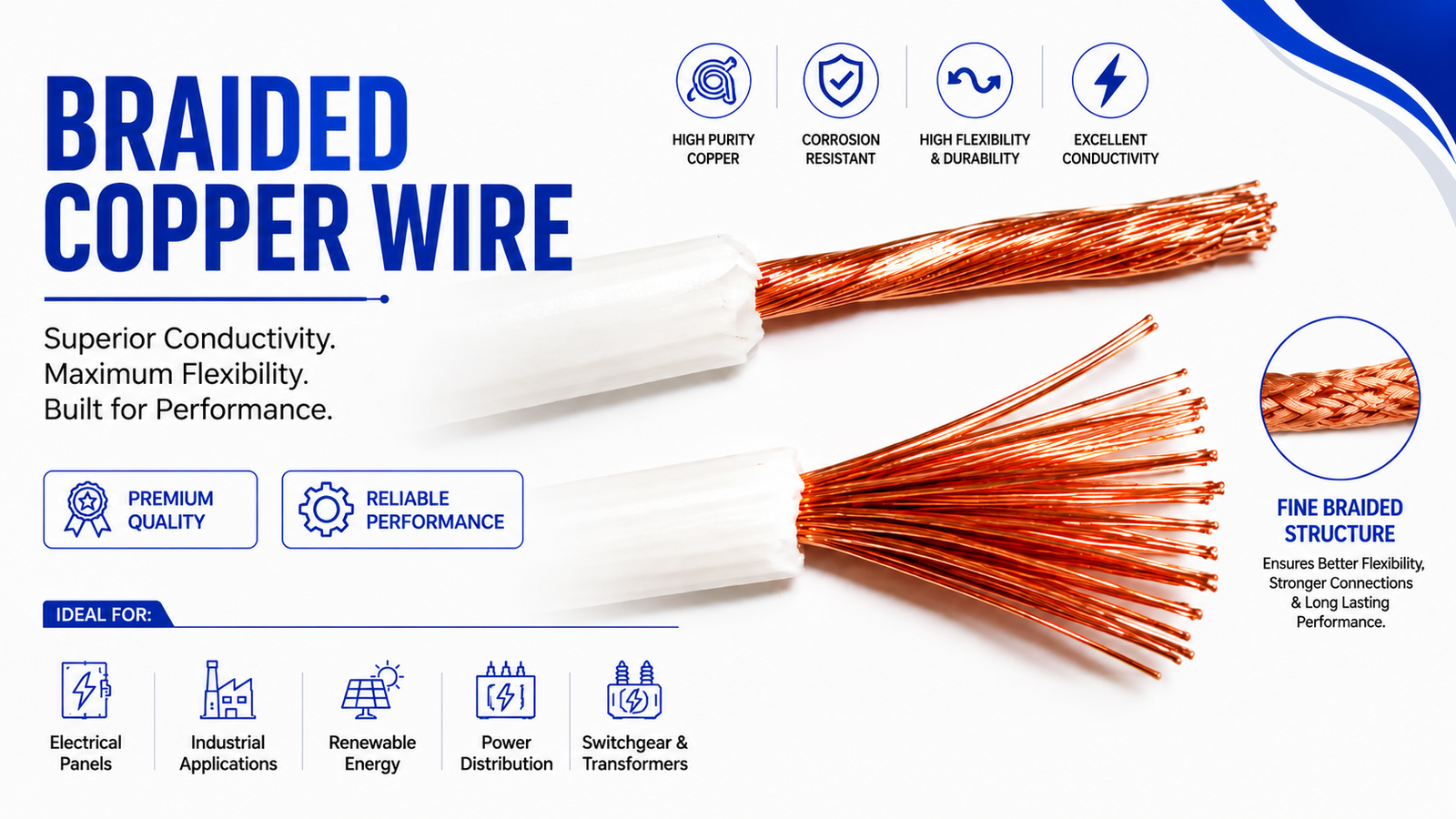
The only thing that sets them apart is their construction. Braided copper wire is made from several thin wires of copper twisted or braided together, and solid copper wire is a single conductor of copper material. This difference has a significant impact on flexibility, mechanical movement, vibration resistance, installation and typical applications.
Braided copper wire is typically used for flexible applications where movement is a factor, whereas solid wire is usually used for applications that must be fixed and stable.
What Is Braided Copper Wire?
Sapphire Braided copper wire refers to the process of braiding a number of thin copper wires into a braided or woven shape.
The conductivity strands make the conductor much more flexible and easy to bend than a solid conductor.
Braided copper wire can be applied to:
What Is Solid Copper Wire?
The solid copper wire is a single, continuous copper conductor.
It is not made from a number of individually flexible strands like braided or stranded conductors.
Fixed electrical installations that do not require a lot of movement of the conductor will typically use solid copper wire. Solid copper wire is stiffer than braided copper wire.
| Specification | Braided Copper Wire | Solid Copper Wire |
|---|---|---|
| Construction | Multiple fine copper wires braided together | Single solid copper conductor |
| Flexibility | Excellent | Low |
| Vibration Resistance | Higher | Lower |
| Bending | Easy to bend repeatedly | Limited |
| Mechanical Strength | Flexible and durable | Rigid and strong |
Applications of Braided Copper Wire
Copper wire with braid is widely used in various industries and electrical components.
Electrical Bonding
Copper braided conductors are used as a normal method of bonding conductive parts.
They can connect:
The most common application is for making jumpers for copper wiring.
A jumper that is braided that allows an electrical connection between two points is a flexible jumper.
Transformer Connections
Vibration and thermal movement are possible in the transformer.
The flexible braided copper connections can help absorb this motion and ensure electrical continuity.
Battery Systems
Copper conductors are braided for use in battery and energy storing equipment where flexibility can be desired.
Applications may include:
Sapphire busbar Flexible connections within switchgear and electrical panels can be made with braided copper conductors. They are especially helpful when components are in close proximity or vibrations and thermal expansion must be compensated for.