

Braided wire has excellent flexibility, vibration resistance and electrical conductivity, making it widely used in electrical and industrial applications. Copper braided wire is often utilized for grounding, bonding, flexible jumper, switch gears, transformers, batteries and industrial equipment.But braided wire is not the best solution for all applications.
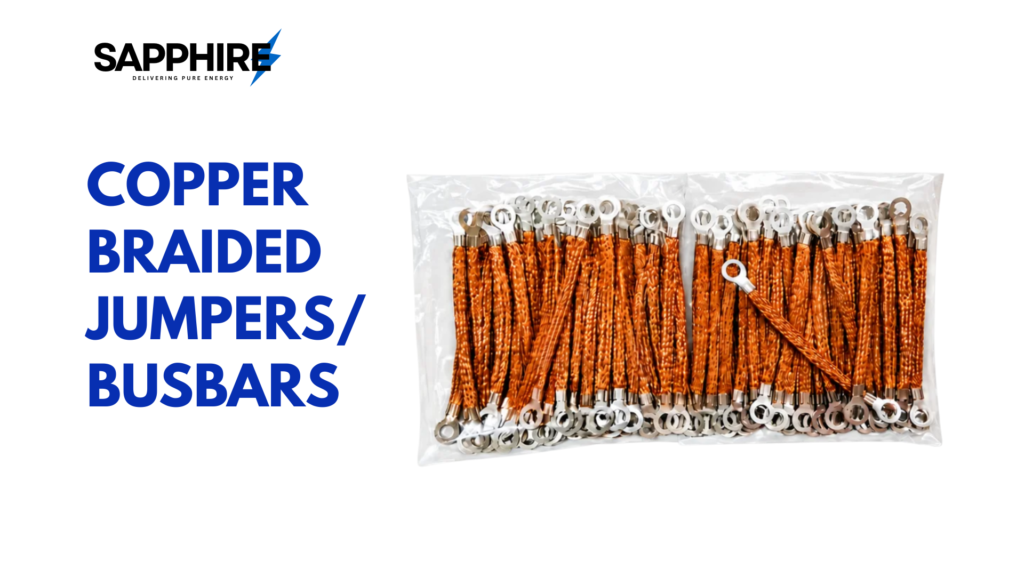
So, what are the disadvantages of braided wire?These drawbacks may include an increased cost, a more complicated termination process, susceptibility to corrosion, increased vulnerability to physical damage if not protected, and a lower rigidity vs. solid wire.Awareness of these limitations can be useful for engineers and installers to select the right conductor for a specific application.
| Disadvantage | Description |
|---|---|
| Higher Cost | Usually more expensive than solid wire due to complex manufacturing. |
| More Difficult Termination | Requires proper lugs, terminals, or crimping for reliable connections |
| Moisture Exposure | Bare braided wire can be more vulnerable to corrosion in harsh environments. |
| Lower Mechanical Rigidity | Its flexibility makes it less suitable where a rigid conductor is required. |
| Manufacturing Complexity | Producing consistent braiding and dimensions can be more complex. |
What Is Braided Wire?
Braided wire consists of a number of thin wires braided together to form an electrical conductor.Braided wire is made up of numerous strands of wire, versus a single, solid copper wire.
This construction offers great flexibility and the conductor is allowed to move and vibrate.
Braided wire is frequently found in:
What Are the Main Disadvantages of Braided Wire?
In electrical applications braided wire (copper braided wire / flexible copper jumper) has a number of important benefits, but it also has some drawbacks that should be taken into account before selecting it.
Higher Cost
The disadvantages of braided wire are the increased manufacturing expense.
A braided copper conductor is achieved by braiding together several thin copper wires according to a special technique. This is more costly than a normal solid or conventional stranded wire of an equivalent cross-sectional area.
Other factors that can add to the overall cost of the system include:
For this reason, for simple fixed wiring systems, a Solid Copper Wire or regular stranded conductor may be a more cost-effective choice.
More Complex Termination
Yet another challenge with braided copper wire is the need for tighter tolerances for termination than solid conductors.
All fine strands need to be securely fastened to provide a stable, low resistance electrical connection.
When not performed properly, termination can result in:
To make sure of this, many copper braided jumpers come with factory installed terminals or lugs to make sure that they’re performing reliably.
Lower Mechanical Rigidity
Another disadvantage of braided wire is its flexibility which may be too great for some installations.
A braided conductor is not the same as solid copper wire in that it doesn’t have a definite shape, or routing path.
This renders it less appropriate if the application needs:
In such an instance, solid copper wire is usually easier to install and to hold in place.
Exposures to risk of corrosion.Corrosion exposure risks.
Bare copper braided conductors do not have insulation protecting them from the environment.
Under extreme conditions, surface oxidation or corrosion of copper may occur because of:
To minimise this risk tinned copper braid is sometimes used as it is more resistant to corrosion. But the proper selection of material depends on particular working conditions.
Sensitivity to Physical Damage.
A braided conductor has fine strands which may be more prone to mechanical damage when not properly protected.
The breaking or fraying of strands can have a detrimental effect on electrical conductivity and mechanical performance.
Protective sleeving and proper installation for greater durability.