

Copper Braid is commonly employed for electrical bonding due to its high electrical conductivity, flexibility and mechanical reliability. Unlike stiffer conductors, braided copper can flex and have the ability to accommodate vibration, movement and thermal expansion and remain electrically continuous between the pieces of conductor to which it is connected.
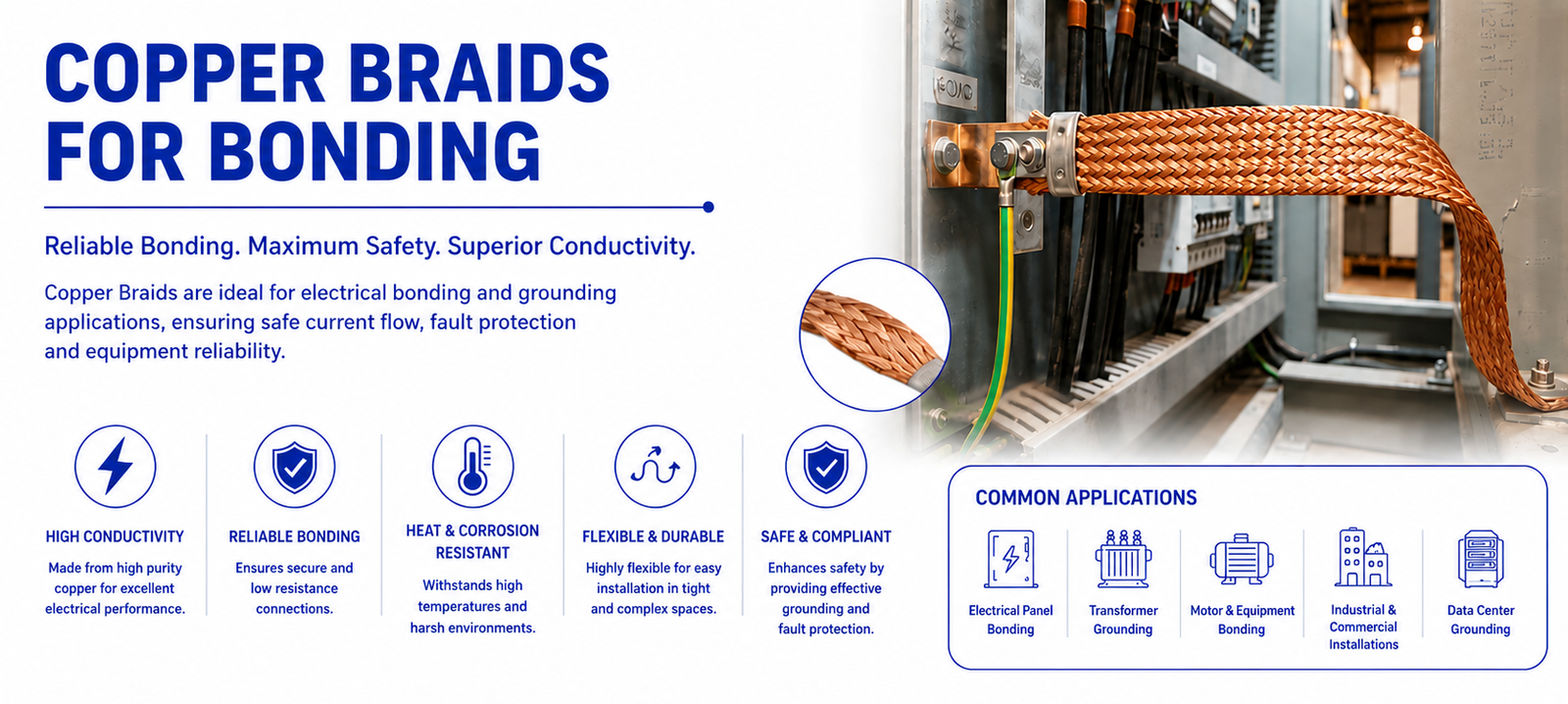
Electrical bonding is of significance in many systems due to the importance of maintaining electrical continuity between conductive parts. Copper braids are widely used in electrical panels, switchgear, transformers, machinery, electrical busbar, enclosures, grounding system, and electrical equipment.
A copper braid can be flexed to use in applications that would normally require a copper bar or solid conductor to endure mechanical stress.
What Is Electrical Bonding?
Electrical bonding is the process of electrically joining conductive components such that they are at a substantially equal electrical potential, and provide reliable conductive path between these components.
Bonding can be used between:
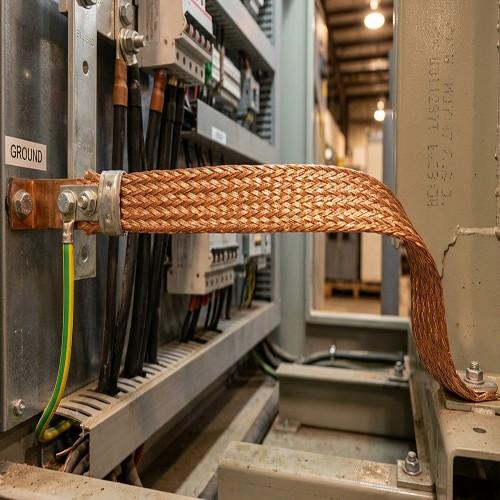
A good bonding connection can aid in electrical continuity and contribute to the safety and operation of an electrical installation.
| Specification | Details |
|---|---|
| Material | High-Conductivity Copper |
| Type | Flexible Copper Braid |
| Electrical Conductivity | Very High |
| Corrosion Resistance | Tinned braid offers higher resistance |
| Applications | Electrical Bonding, Earthing, Switchgear, Transformers & Panels |
What Is a Copper Bonding Braid?
Copper bonding braid is a flexible conductor that is created by multiple fine copper strands woven together.
The braid may be provided as a single strip or it can be made as a full bond jumper incorporating terminals or lugs at each end.
Common options include:
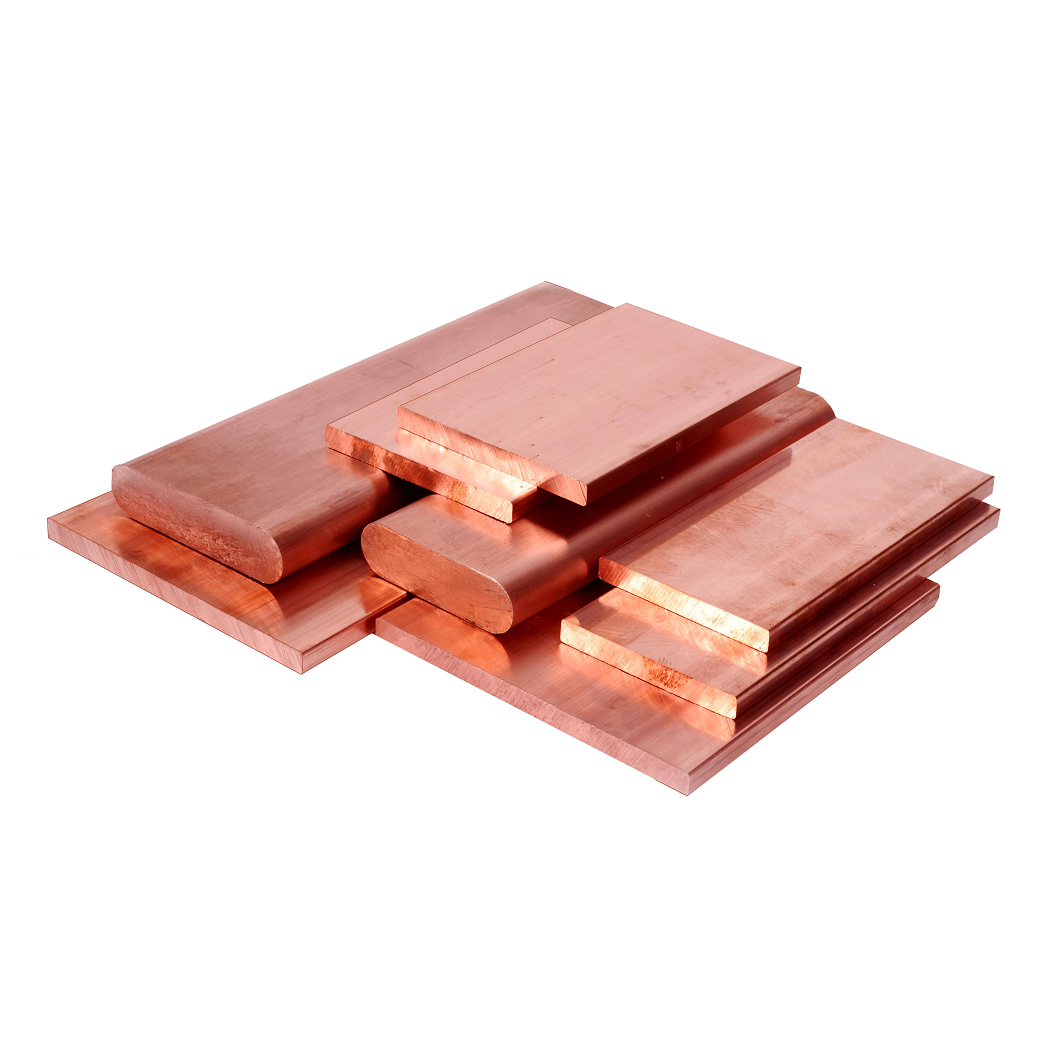
The size of braid, the number of strands, width, thickness and termination of it can be chosen depending the application.
Why Is Copper Braid Used for Electrical Bonding?
Excellent Electrical Conductivity:
Copper is a highly conductive material, and is used in electrical bonding and grounding.
Copper braid can be used to create a low resistance conductive path between bonded parts while being flexible.
High Flexibility:
One is the flexibility of copper braids in bonding.
Repeated movement may not be possible with a solid conductor or rigid copper bar. A braided conductor is made of a large number of small conductors that are free to move in the braid.
This makes copper bonding braids able to:
This motion can easily be accommodated by a flexible copper braid as compared to a rigid connection, which allows for good electrical continuity between the connected components.
Accommodates Thermal Expansion:
There is a possibility that electrical equipment can get hot while in use. The temperature of the different components can cause them to expand and contract.
Mechanical stress can be induced on rigid connections when the connected components move due to the thermal expansion.
Some of this movement can be accommodated by a flexible copper bonding braid, which helps minimize mechanical strain at the connections.
Safe Earthing and Earthing Bonding:
Copper braids are often used to form a flexible connection between equipment and ground.
A metal enclosure door can be joined to the main enclosure by a copper braid, for instance. The flexible braid can provide electrical continuity when the door is opened and closed.
Common Applications of Copper Braids for Electrical Bonding
Electrical Panel Doors:
The most frequent use is the connecting of a movable door to a cabinet.
A flexible copper braid allows to keep the electrical continuity intact even after frequent opening and closing of doors.
Switchgear:
Switchgear has several conductive parts and moving parts.
Copper bonding braids can offer flexible electrical connections between components at locations where there’s movement or vibration.
Transformers:
Mechanical vibrations and temperature changes can occur in transformers when operating.Flexible copper bonding connections will allow for movement and keep the electrical continuity.
Industrial Machinery:
Vibration and mechanical movement are the key factors that can lead to high vibration in industrial machinery.
Copper braids may be used for grounding and bonding between machine components, panels, covers and electrical equipment.