

In electrical systems where high current power distribution is required to be incorporated with electrical insulation as well as compact construction and reliable connections, insulated copper busbars can be employed. Insulated busbar designs have an insulating coating over the conductive copper material which helps prevent accidental contact and electrical faults.
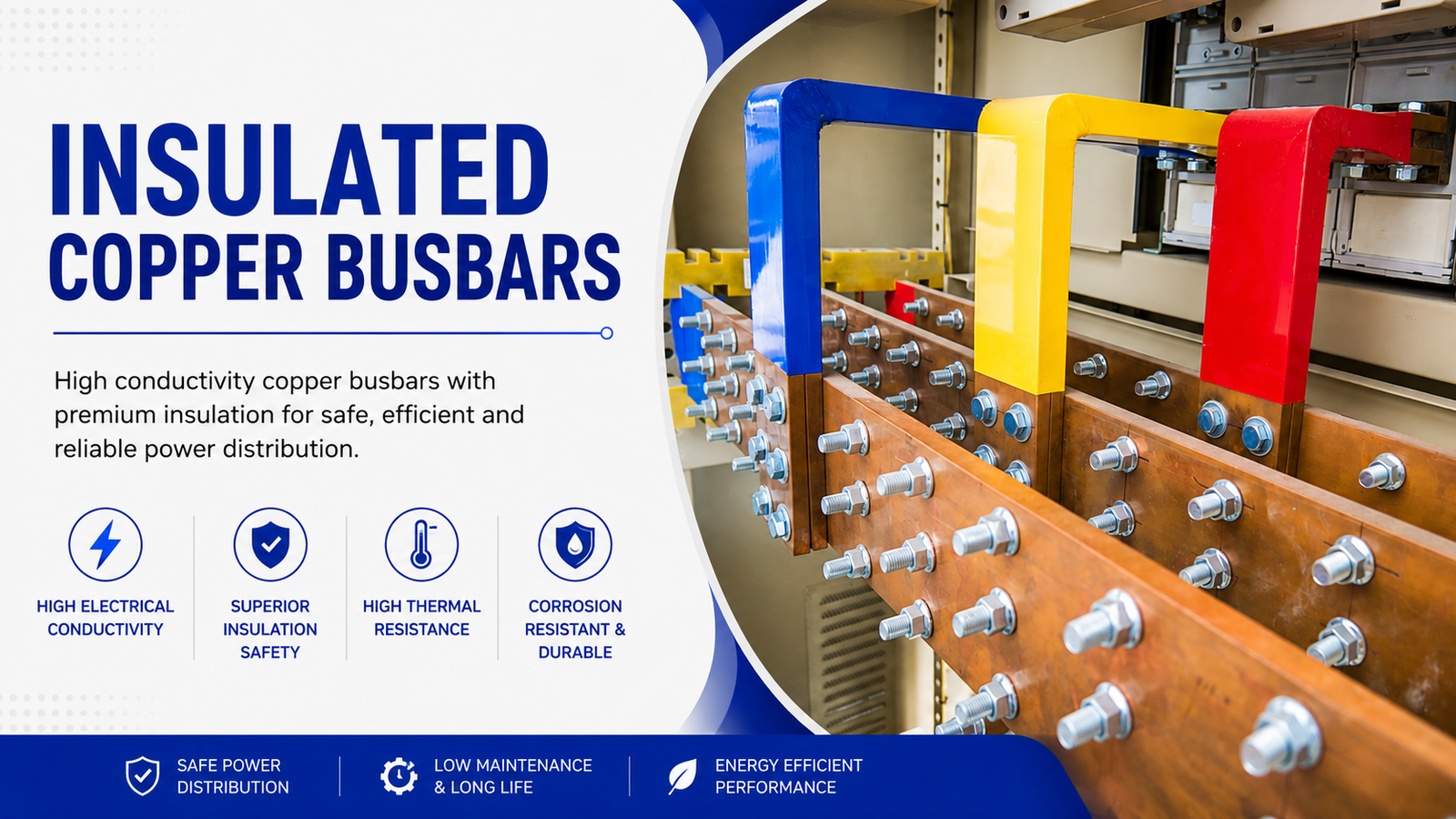
The primary applications of insulated copper busbar are in electrical panels, switchgear, distribution boards, UPS, battery energy storage systems, EV power systems, solar inverters, industrial equipment, and power conversion systems.
They can be used in situations where there are several high current conductors in confined spaces where electrical equipment is used.
Where Are Insulated Copper Busbars Used
The most common applications include:
| Feature | Insulated Copper Busbar | Bare Copper Busbar |
|---|---|---|
| Copper conductor | Yes | Yes |
| Insulation | Yes | No |
| Electrical conductivity | Excellent | Excellent |
| Accidental-contact protection | Better | Requires barriers/clearance |
| Compact installation | Excellent | Excellent |
| Visual inspection | More limited | Easier |
Benefits of Using Insulated Copper Busbars
High Electrical Conductivity:
Copper has high conductivity and is an effective conductor of electricity in general compared to aluminium.
Electrical Insulation:
The insulating layer can ensure that conductive components will not come into contact if necessary.
Compact Design:
Busbars can make multiple high currents without taking as much routing space as multiple conventional cables.
Better Organization:
Bus bars can help to streamline the internal layout of electrical equipment.
Reduced Short-Circuit Risk:
Correct spacing of adjacent conductors may be aided by appropriate insulation.
High-Current Capability:
If designed correctly, the copper busbar can carry large currents.
What Industries Use Insulated Copper Busbars
Insulated copper busbars are used across many industries, including: