

Tinned copper busbars for renewable energy use are a dependable choice for high current electrical connections in solar energy, battery storage systems, wind power and other renewable energy equipment. These busbars are a combination of copper’s excellent conductivity and a protective Tin outer layer that enhances surface anti-oxide and corrosion resistance.
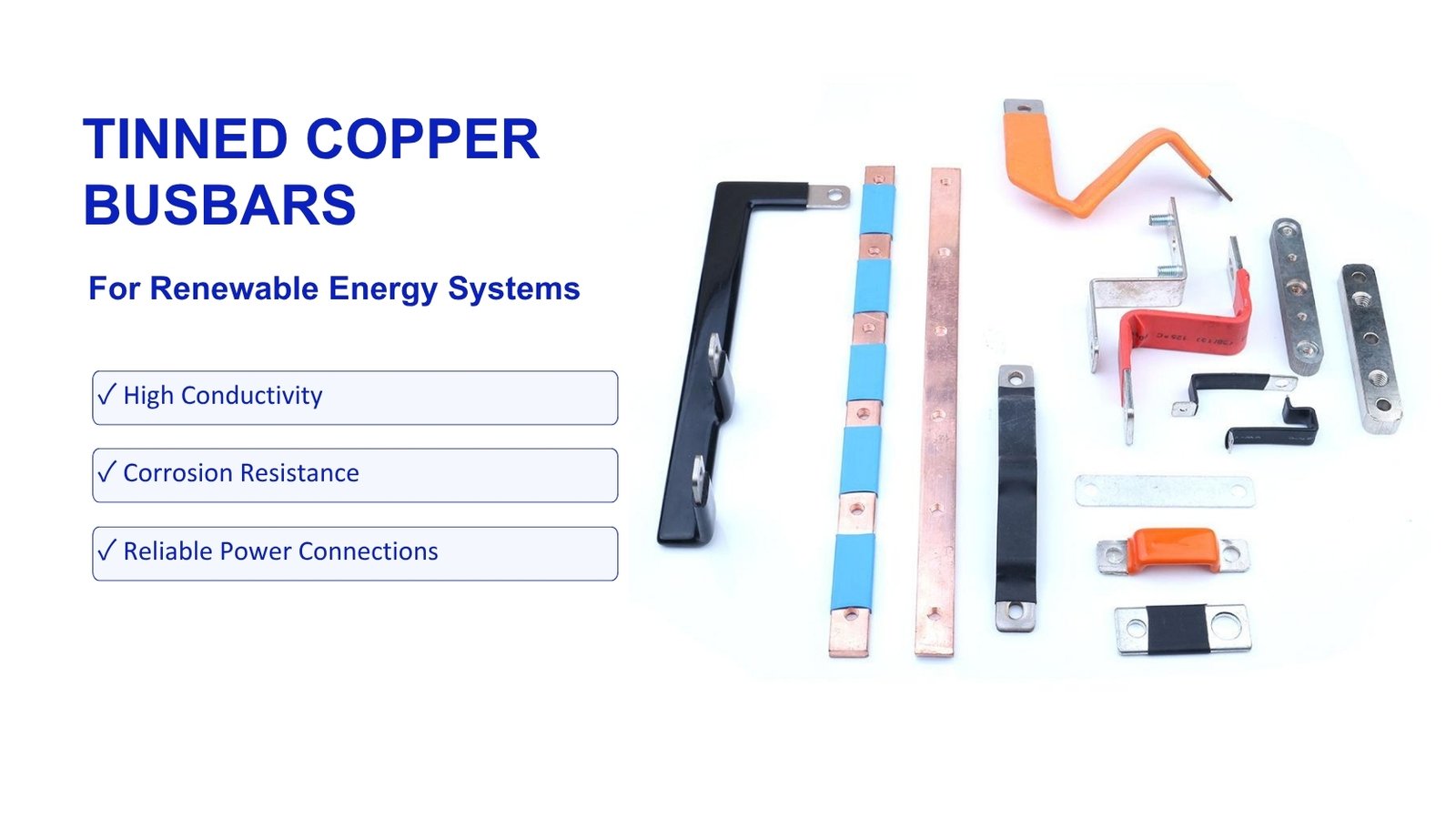
Humidity, moisture, condensation, temperature fluctuations, dust and exposure to the outdoors are all difficult conditions for renewable-energy installations. A tinned copper surface may offer benefits compared to an uncoated copper surface in this type of environment.
Tinned copper busbars can power the efficient and organized distribution of power from solar inverters and battery energy storage systems, to DC distribution equipment and wind-power electrical systems.
Why Use Tinned Copper Busbars in Renewable Energy Systems
Renewable-energy equipment can be subject to environmental conditions that can impact electrical connections and can run for extended periods of time.
Tinned copper busbars in renewable energy systems offer several key benefits, such as:
| Feature | Tinned Copper | Aluminium |
|---|---|---|
| Electrical conductivity | Higher | Lower |
| Weight | Higher | Much lower |
| Required cross-section | Smaller | Generally larger |
| Surface protection | Tin coating | Natural oxide layer |
| Compact design | Excellent | Requires more space |
| Battery applications | Highly suitable | Application dependent |
How to Choose Tinned Copper Busbars for Renewable Energy Systems
These are points to take into account when choosing a busbar.
Current Rating:
Voltage:
The necessary insulation and system voltage must be taken into account.
Busbar Dimensions
Specify:
Evaluate:
Determine the type and thickness of coating needed to the application.
Frequently Asked Questions
Yes. They are well suited to many battery and energy-storage applications because they provide excellent conductivity and additional surface protection.