

Determination of the current carrying capacity of aluminium busbar is significant in the design of electrical panels, switchgear, busducts, power distribution systems and industrial electrical equipment. Other factors are more important than the width and thickness of a busbars when considering its ability to carry current.
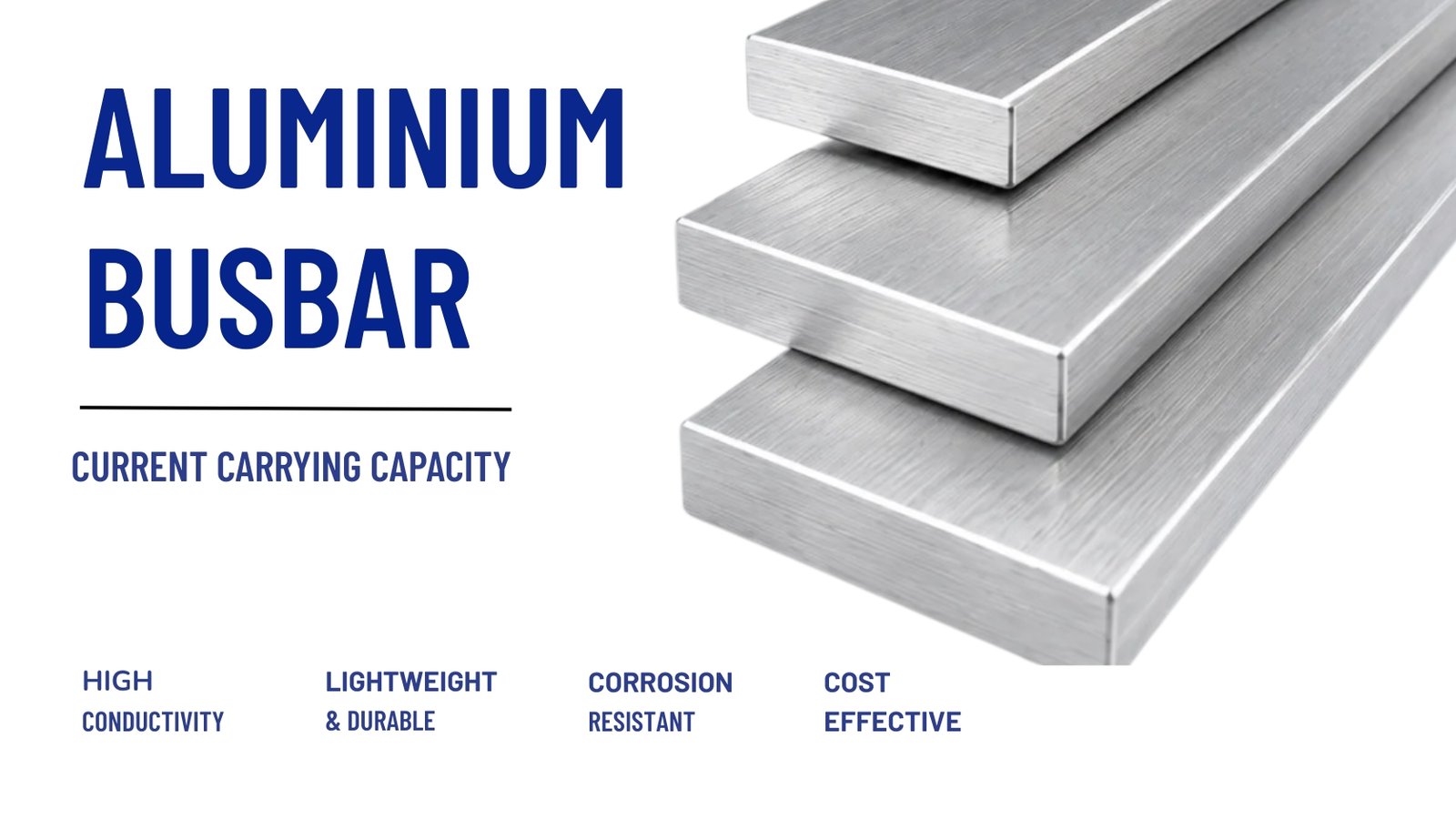
The allowable current is influenced by a number of factors including cross-sectional area, operating temperature, ambient temperature, enclosure design, surface area, airflow, busbar arrangement and connection quality.
The electrical conductivity of aluminium is lower than that of copper, so a Sapphire busbar made of aluminium will typically need to be larger in cross sectional area. It has, however, a much lower weight making it desirable in many large-scale power-distribution applications.
What Is Aluminium Busbar Current Carrying Capacity
Sapphire Aluminium Busbar Current carrying capacity (ampacity) is the highest continuous current allowed to pass through the busbar without reaching its operating temperature limit in a specific installation.
An example of this is an aluminium busbar that is mounted in an open, well-ventilled configuration as opposed to the same aluminium busbar mounted in a compact electrical panel with an enclosed configuration.
Thus, no single current rating exists for all the aluminium busbar sizes.
The rating shall have to be established based on the actual design and applicable standards.
| Aluminium Busbar Size | Approx. Cross-Section | Indicative Current Range* |
|---|---|---|
| 20 × 3 mm | 60 mm² | ~150–200 A |
| 25 × 5 mm | 125 mm² | ~250–350 A |
| 30 × 5 mm | 150 mm² | ~300–400 A |
| 40 × 5 mm | 200 mm² | ~400–500 A |
| 50 × 5 mm | 250 mm² | ~500–650 A |
| 50 × 10 mm | 500 mm² | ~800–1,000 A |
| 60 × 10 mm | 600 mm² | ~900–1,100 A |
| 80 × 10 mm | 800 mm² | ~1,100–1,400 A |
| 100 × 10 mm | 1,000 mm² | ~1,300–1,600 A |
Aluminium Busbars in Electrical Panels
Sapphire Aluminium busbars are used in:
For panel applications, the designer should consider the thermal impact of all heat-generating components inside the enclosure.
How to Select the Right Aluminium Busbar Size
Here are some simple steps:
Step 1: Determine the Current:
Determine needed DC current and possible peak and/or short duration current.
Step 2: Determine the Voltage:
The voltage has impact on the insulation, clearance and overall system design.
Step 3: Select the Aluminium Grade:
Electrical and mechanical characteristics of the aluminium alloy/grade should be suitable for the application.
Step 4: Calculate the Required Cross-Section:
Determine the conductor area required based on electrical and thermal requirements.
Step 5: To check temperature rise:
Verify that the operating temp. is within the allowable range.
Step 6: Check Installation Conditions:
Evaluate:
Step 7: Verify Connections:
Design all joints, terminals and transition connections to accommodate the current and temperature.
Step 8: Check against relevant Standards:
Before finalizing the Busbar Rating calculation, use the relevant Electrical Standard or manufacturer’s tested data.
Frequently Asked Questions
Aluminium has lower electrical conductivity than copper. Therefore, a larger cross-sectional area is generally required to achieve comparable electrical resistance and current-carrying performance.