

Why do copper busbars need to be tinned? To achieve a more resistant surface to oxidation and corrosion, copper busbars are often tinned. Tinning is a process that is performed to achieve the best electrical conductivity in copper, and also to coat the surface with tin for its protective property.
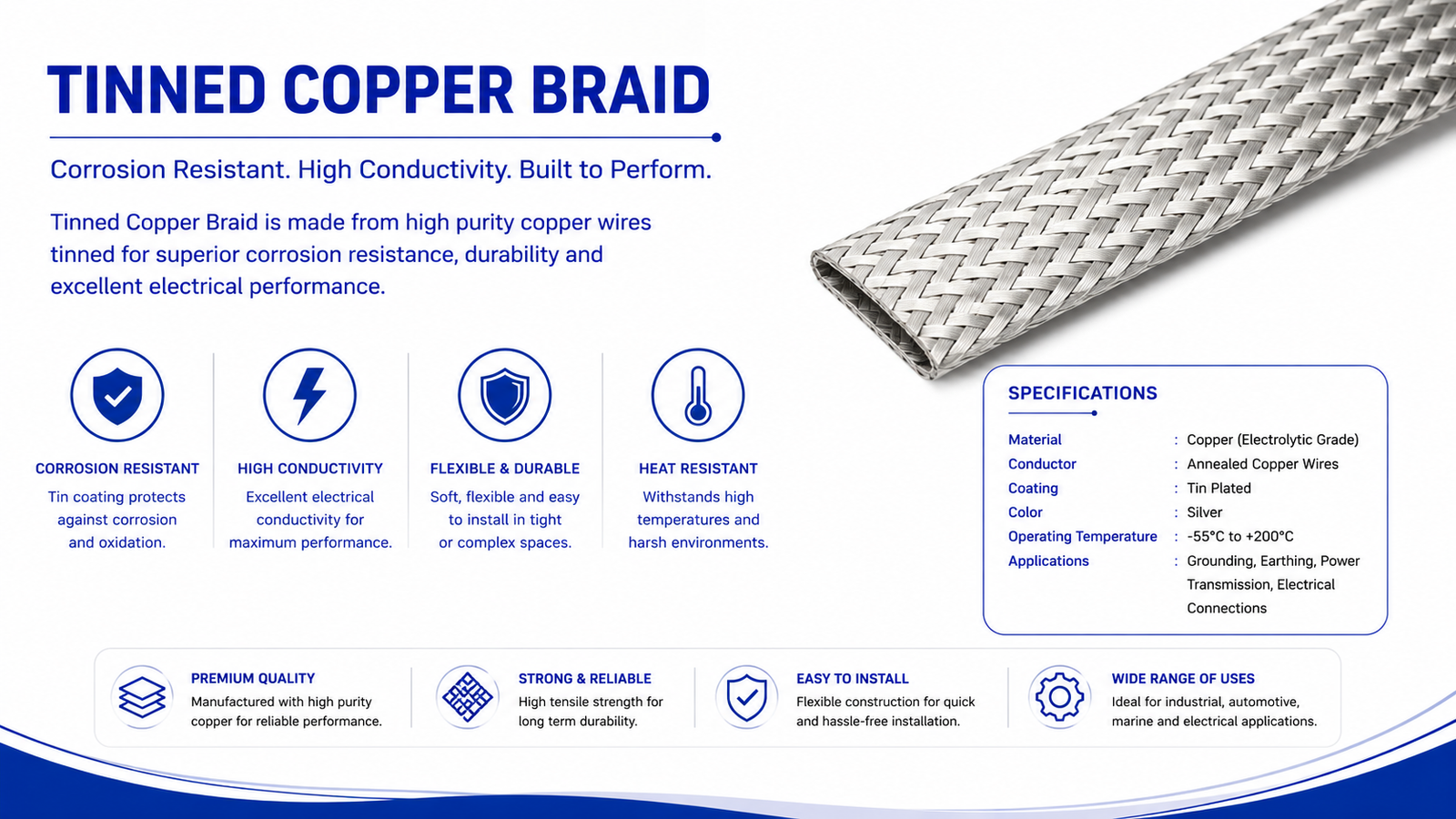
This is especially beneficial in electrical systems subjected to humid, moisture, condensation, salt air and other difficult environmental conditions, making tinned copper busbars a useful tool.
Tinning is particularly prevalent in battery systems, marine electrical equipment, switchgear, solar systems, EV equipment, energy storage systems and industrial power-distribution equipment.
Why Are Copper Busbars Tinned
Manufacturers and electrical engineers select tinned copper busbars for a number of reasons.
1. Improved Corrosion Resistance:
One of the main reasons why copper busbars are tinned is to improve the surface’s resistance to oxidation and corrosion.
Surface oxides may form on bare copper in the presence of air and environmental contaminants.
There’s an extra layer of protection over the copper by a tin coating.
This can be very helpful in areas with:
| Feature | Tinned Copper Busbar | Bare Copper Busbar |
|---|
| Copper core | Yes | Yes |
| Tin coating | Yes | No |
| Electrical conductivity | Excellent | Excellent |
| Surface oxidation protection | Better | Lower |
| Humid environments | Better suited | Requires suitable protection |
| Marine applications | Highly suitable | Additional protection may be needed |
2. Better Surface Protection:
Tinning forms a protective layer on the surface of the copper conductor.
This will help to minimize direct exposure of copper to the environment.
Therefore, tinned copper busbars are especially beneficial in certain applications where busbar surface could be exposed during assembly and use.
3. Applicable to humid environment:
Condensation and moisture can occur on electrical equipment in humid areas.
Examples include:
This can be achieved by adding extra protection with the application of a tin coated copper surface.
The entire electrical assembly does require suitable environmental protection, however.
4. Useful for Marine Applications:
Marine environments are especially challenging as the electrical equipment may be subjected to:
Thus, it is recommended to use tinned copper busbars for appropriate marine electrical applications.
They can be incorporated in:
Where Are Tinned Copper Busbars Used
Heating elements, such as tinned copper busbars, are used in:
Battery Systems:
For high current battery connections and for DC distribution.
Marine Electrical Systems:
In locations with high humidity and salty air.
Solar Power Systems:
Able to use the appropriate DC distribution and power-conversion equipment.
EV Systems:
For battery packs and high current power connections.
Energy Storage Systems:
In battery racks, DC bus systems and power distribution.
Frequently Asked Questions
They can be a better choice when environmental exposure is a concern. Bare copper can be suitable for protected and dry applications where additional surface protection is not required.