

Aluminium busbars are popular for electrical power distribution and high current applications demanding a light, economical conductive material.
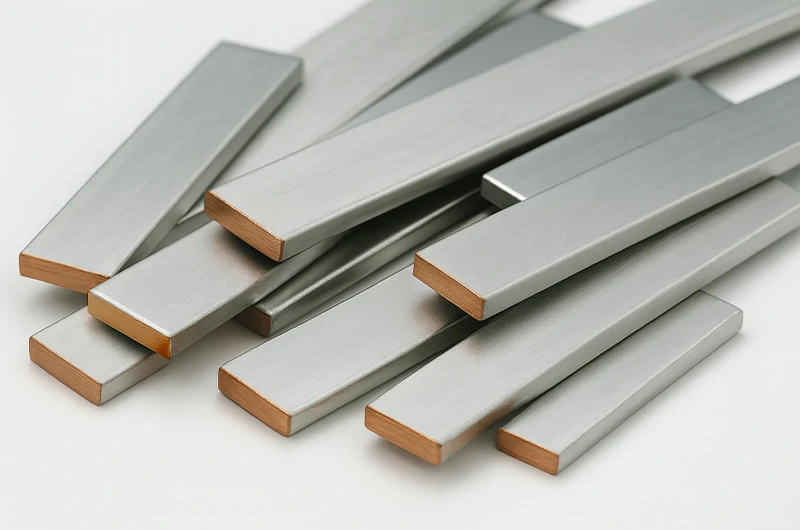
A busbar is used to carry electrical power from one circuit to another and various equipment. Aluminium is commonly used as it offers a lower density, good electrical conductivity and is often cheaper than copper.
When designed and installed correctly, aluminium busbars can offer an efficient solution for switchboards and distribution panels, renewable-energy systems, industrial equipment, transformers, and large power-distribution installations.
What Is an Aluminium Busbar
An aluminium busbar is a metal profile, bar or strip of aluminium which is conductive and is used to transport and distribute electrical current.
Common forms include:
These can be used as bare conductors or provided with suitable insulation or protection.
The dimensions are selected according to factors such as:
| Feature | Aluminium Busbar | Copper Busbar |
|---|---|---|
| Electrical conductivity | Good | Excellent |
| Weight | Lower | Higher |
| Material cost | Generally lower | Generally higher |
| Required cross-section | Usually larger | Usually smaller |
| Handling | Easier for large systems | Heavier |
| Thermal conductivity | Good | Higher |
Applications of Aluminium Busbar
Aluminium busbars can be used in:
Frequently Asked Questions
Yes. Properly designed aluminium busbars can be used for high-current applications. They generally require a larger cross-sectional area than copper for comparable current-carrying performance.
Aluminium naturally forms a protective oxide layer. However, connections require proper design because the oxide layer is electrically resistive and environmental conditions can affect long-term performance.