

A copper jumper and busbar can both be used to carry electrical current, but they perform different roles within an electrical system.
A copper jumper is a flexible piece of copper which is used to electrically connect two points, and a busbar is a piece of copper with low resistance that is used to distribute electrical power between many circuits or components.
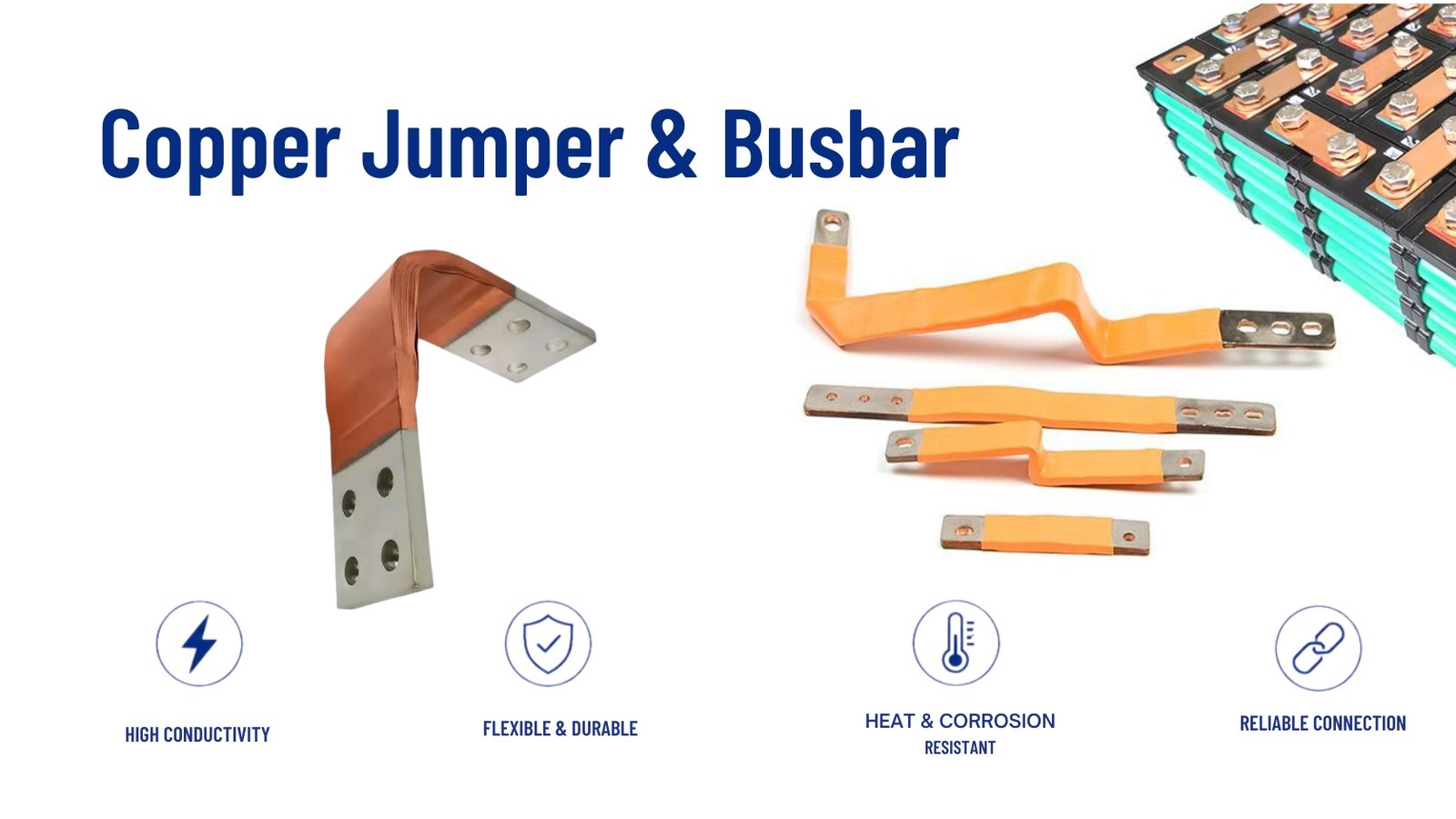
Both can be produced from copper, which has a high electrical conductivity. The construction and flexibility, however, as well as the size, dimensions, how they are installed and where they are used can vary considerably.
It is crucial to be aware of the distinction between a copper jumper vs busbar when choosing an electrical connection in switchgear, transformers, batteries, EV systems, solar, and industrial power systems.
| Application | Typical Use |
|---|---|
| EV Battery Packs | Flexible connections between battery cells, modules and power terminals |
| Switchgear & Control Panels | Connecting breakers, switches and busbar systems |
| Transformers | Flexible connections that accommodate vibration and movement |
| Power Distribution Systems | High-current connections between electrical components |
| Renewable Energy Systems | Connections in solar inverters, battery storage and power equipment |
| UPS Systems | Battery and high-current power connections |
| Industrial Machinery | Flexible electrical connections in moving or vibrating equipmen |
Copper Jumper and Busbar: Construction Differences
Copper Jumper Construction:
Typically multiple fine strands or braided copper are used for a flexible copper jumper.
This construction provides:
Terminals or lugs can be attached to both ends.
Copper Busbar Construction:
Typically, a copper busbar is created using flat copper strip or bar.
It can be as big as:
Rigid busbars are mainly used for electrical distribution and mechanical support.
Advantages of Copper Jumpers
Copper jumpers offer several key advantages, such as:
Frequently Asked Questions
Neither is universally better. The correct choice depends on the function. Use a jumper when you need a flexible connection between points and a busbar when you need an efficient power-distribution path.