

Copper flexible busbars are commonly employed in electrical and power-distribution devices that demand both high electrical conductivity and flexibility. Copper flexible busbars can be flexed, will absorb some mechanical movement, and will also allow for thermal expansion, which will not occur in rigid copper bars.
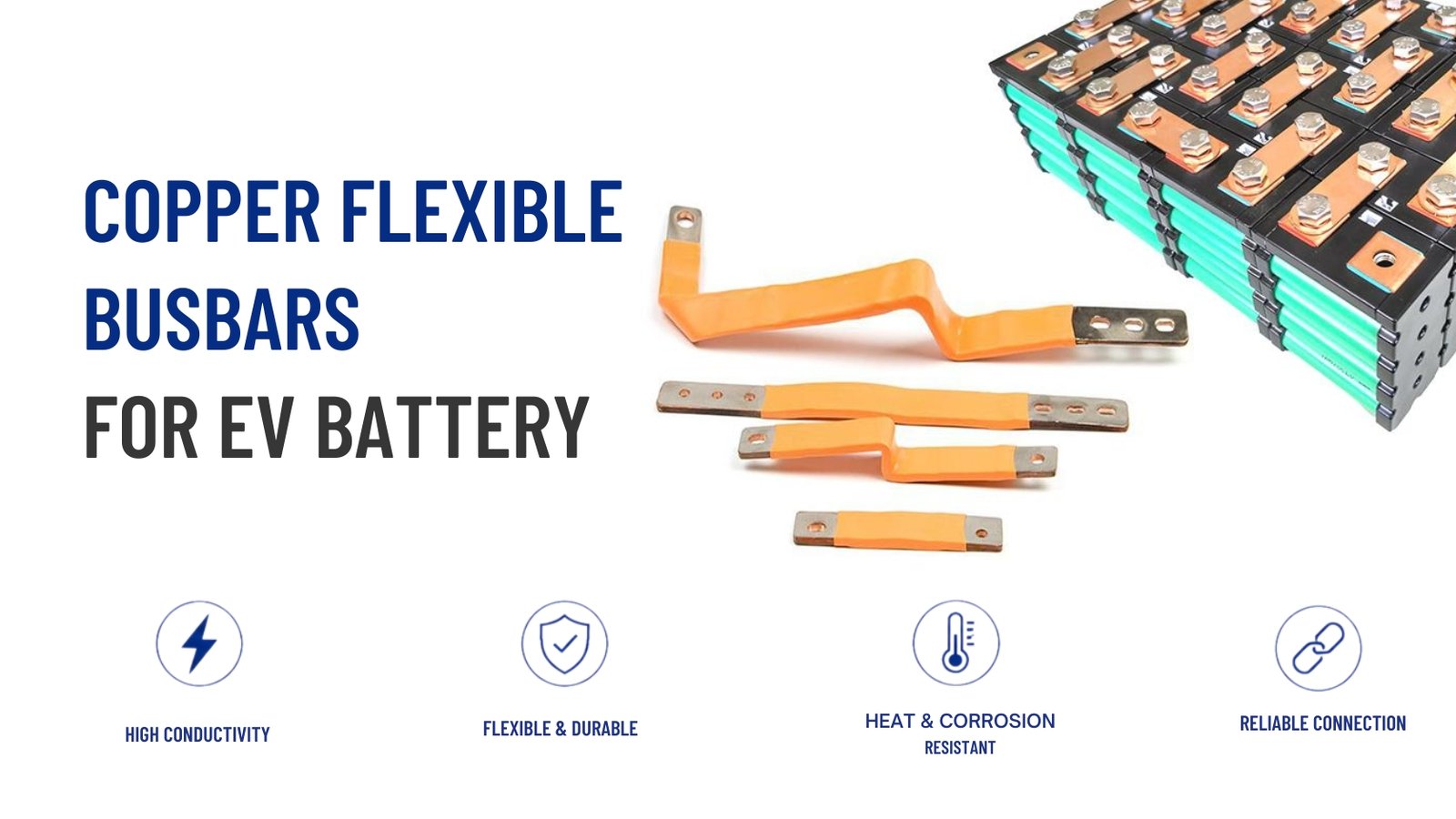
Typically, they can be found in switchgears, transformers, electrical panels, battery systems, EVs, charging stations, solar power systems, renewable energy plants, UPSs, and industrial machinery.
Copper flexible busbars can be used in electrical connections where using rigid conductors could be challenging or could cause too much mechanical stress at the connection points.
Where Are Copper Flexible Busbars Used?
Copper flexible busbars are the common materials used in electrical/power distribution equipments demanding high electrical conductivity and mechanical flexibility. The flexible copper busbars consist of copper flexible wire, which can bend, absorb part of the mechanical movement and adapt to the thermal expansion of the copper bar compared to rigid copper bars.
They are frequently used in switchgears, transformers, electrical panels, battery systems, electric vehicles, charging stations, solar energy systems, renewable energy projects, UPS (uninterruptible power supply) systems, and in industrial machinery.
| Application | Typical Use |
|---|---|
| EV Battery Packs | Flexible connections between battery cells, modules and power terminals |
| Switchgear & Control Panels | Connecting breakers, switches and busbar systems |
| Transformers | Flexible connections that accommodate vibration and movement |
| Power Distribution Systems | High-current connections between electrical components |
| Renewable Energy Systems | Connections in solar inverters, battery storage and power equipment |
| UPS Systems | Battery and high-current power connections |
| Industrial Machinery | Flexible electrical connections in moving or vibrating equipment |
1. Switchgear:
Copper flexible busbars are used in switchgear applications quite commonly.
Multiple electrical components can be found in switchgear that can require flexible connections.
Flexible busbars made of copper can be used for:
2. Transformers:
Vibration and temperature swings can occur in a transformer while it is operating.
Flexible busbars made of copper can be used to make flexible connections between the terminals of a transformer and related equipment.
Applications can include:
Easing mechanical stresses on transformer terminals is achievable through flexible construction.
3.Electrical Panels
In electric control panels and distribution boards many parts are usually required in small spaces
A copper flexible busbar can be used to connect:
4. EV Battery Systems
As the EV industry is expanding, the need for a compact, high-current electrical connection exists.
Copper flexible busbars can be applied to appropriate EV applications including:
The flexible construction can accommodate vibration and thermal movement and can also be optimized for space constraints, enabling designers to make the best use of space.
The whole busbar assembly should also comply with the voltage, insulation, creepage, clearance, and thermal requirements for high voltage EV systems.
Why Are Copper Flexible Busbars Used?
The electrical and mechanical properties of copper flexible busbar makes it popular.
Excellent Conductivity: Copper is a good conductor of electricity.
Flexibility: The flexible construction enables the connection to bend or move slightly with some movements.
Vibration Resistance: Rigid conductors are not as effectively able to withstand vibrations as flexible connections are.
Thermal Expansion: They can withstand some expansion and contraction due to temperature changes.
Compact Installation: The flexible busbars are used to move around in limited areas to wrap around components.
Customization: They can be produced based on the specified length, width, thickness, terminal and bending specifications.
Frequently Asked Questions
Copper flexible busbars are commonly used in switchgear, transformers, electrical panels, EV battery systems, EV chargers, solar inverters, battery energy storage systems, UPS equipment, generators, and industrial power equipment.