

If the system is a high current copper busbar it is important to consider heat. The busbar has electrical resistance, and the generation of heat occurs when the busbar is carrying the electrical current. When the heat output exceeds the heat removal to the environment, the busbar and its connections can be heated.
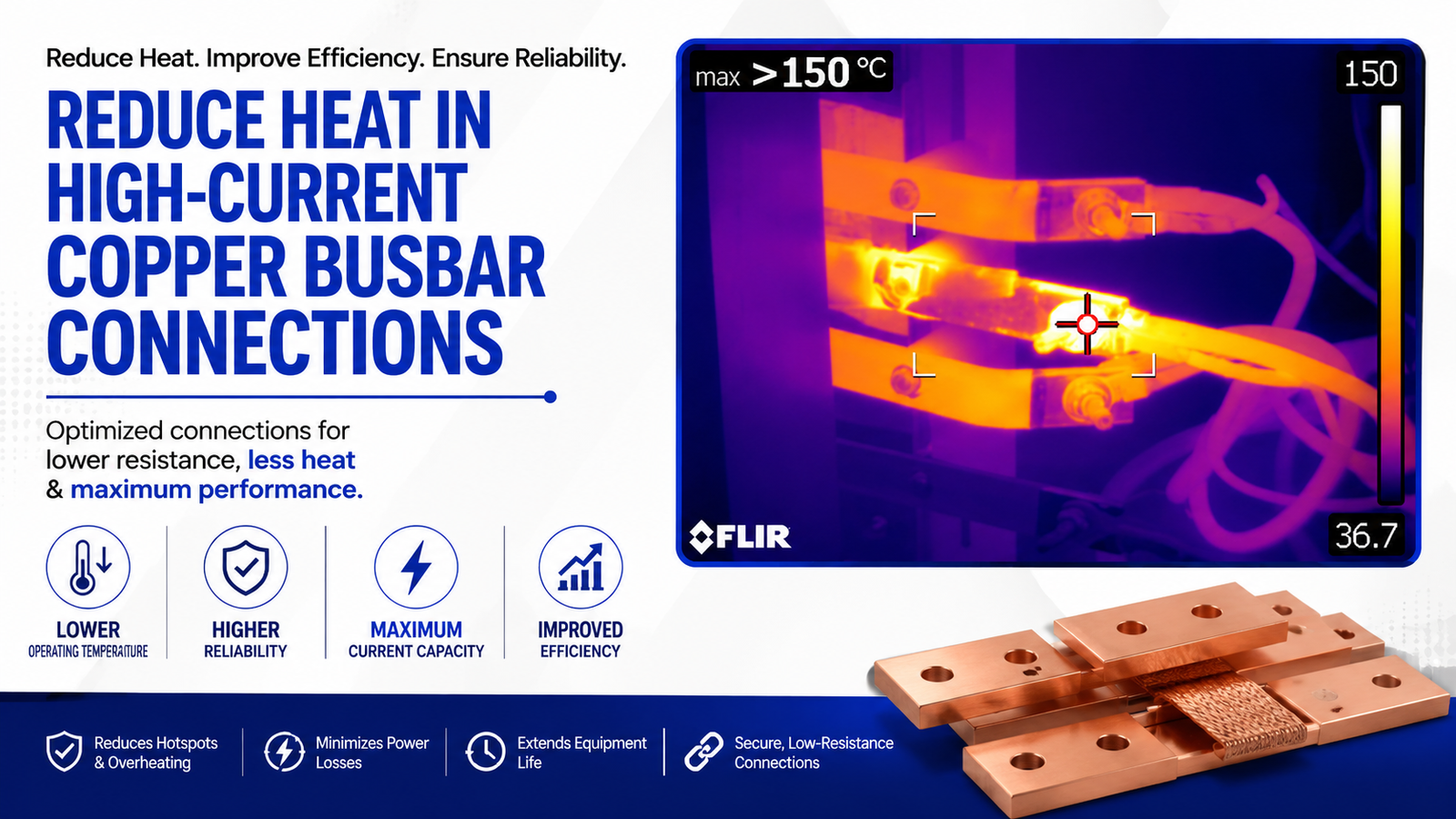
High temperatures can have an impact on insulation, connection hardware, equipment reliability and service life. If the design of a high-current copper busbar connection is poor or it is not installed properly, it is possible for localized hot spots to form.
Fortunately, there are several methods to help minimize the amount of busbar heating including busbar sizing, connection design, surface preparation, tightening, ventilation, thermal management, and regular inspection.
How to Reduce Heat in a High-Current Copper Busbar Connection
The best way to do this is to follow these steps:
Step 1: Verify the current.
Determine the actual operating current.
Step 2: Check Busbar Size
Ensure the cross-sectional area is adequate for the electrical load and operating conditions.
At this point, check the Joint (step 3).
Look for loose hardware, contamination, corrosion, or inadequate contact.
Step 4: Verify Torque
Verify the connection with manufacturer’s recommended torque.
Step 5: Inspect Temperature
Employing suitable temperature reading or thermal imaging to find hot spots.
Step 6: Check Ventilation
Ensure enclosure/busbar layout has sufficient cooling.
Step 7: Review the Design
If heating continues, review the size of the busbar, the design of the joints, the spacing, the current loading and thermal conditions.
Common Causes of Copper Busbar Overheating
| Cause | Possible Effect |
|---|---|
| Undersized busbar | High temperature |
| Excessive current | Increased I²R losses |
| Loose connection | Localized hot spot |
| Poor contact surface | Increased resistance |
| Contamination | Higher contact resistance |
| Poor ventilation | Reduced heat dissipation |
| Crowded busbars | Higher surrounding temperature |
| Incorrect torque | Poor or damaged connection |
| Corrosion | Increased resistance |
| Poor joint design | Localized heating |
Why Do High-Current Copper Busbars Heat Up?
The primary source of resistive heating is the electrical resistance.
A simplified relationship is:
Power loss = I²R
Where: I = current
R = electrical resistance
This implies that increase in current can lead to a considerable increase in heat generation.
If the resistance stays the same and the current doubles, then the resistive heating will be quadrupled.
In a high current copper busbar system, a small resistance at the connection can cause a major heat loss.
Common sources include: