

Sapphire busbar/Copper Flexible Jumpers for Switchgear are used for the reliable electrical connection of switchgear with the freedom of movement and vibration, thermal expansion and mechanical flexibility. Electrical or mechanical components within switchgear assemblies can move when they are being operated or serviced or during thermal cycling.
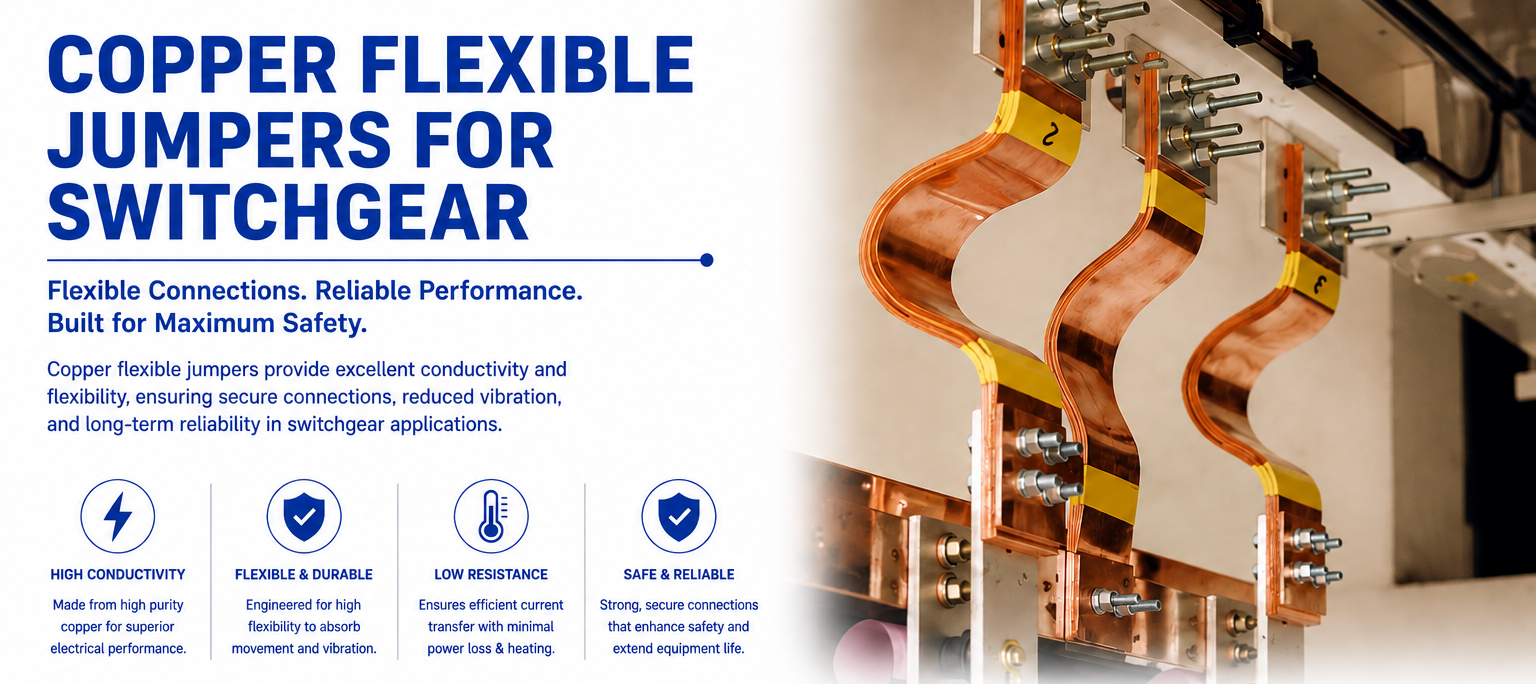
Flexible jumpers are comprised of a number of fine copper strands or braided copper conductors, as opposed to rigid copper conductors. By being flexible as well as secure in an electrical connection, these constructions make it easy for them to bend and flex.
Sapphire busbars, copper flexible jumpers are used for grounding, bonding, flexible connections between switchgear components, busbar connections, movable parts, and electrical equipment connections.
Why Are Flexible Jumpers Used in Switchgear?
Switchgear should ensure the reliable electrical contact and cope with the mechanical and thermal conditions.
Switchgear parts can be subject to:
Not all connections can be made using a rigid conductor.
The flexible copper jumper offers some mechanical compliance and also electrically connects.
| Specification | Details |
|---|---|
| Material | High-Conductivity Copper |
| Copper Grade | ETP / EC Grade |
| Wire Diameter | 0.10–0.30 mm |
| Width | 10–200 mm |
| Length | Customizable |
Benefits of Copper Flexible Jumpers for Switchgear
Excellent Electrical Conductivity:
Copper is a good conductor of electricity and thus is used for electrical jumpers.
An appropriately sized Sapphire busbar, flexible copper jumper can offer an effective conductive route between the parts of the switchgear. The appropriate conductor size must be selected based on the design requirements, installation environment, temperature and current.
High Flexibility:
The main benefit of the Sapphire flexible copper jumpers is their flexibility and their ability to bend and move.
This is especially helpful in switchgear, where components could be right next to each other or where a connection must be able to move.
Vibration Resistance:
Electrical equipment, such as switchgear, can vibrate.
A flexible jumper will be able to better withstand vibration and movement than a stiff conductor, which will help to minimize mechanical stresses at connection points.
Correct voltage drop calculations:
Copper flexible jumpers are often used in grounding or bonding.
They can connect two nodes electrically together as:
A bonding jumper that provides flexibility may be needed for mobile doors and covers that must be permanently connected to the enclosure.
Common Uses of Copper Flexible Jumpers in Switchgear
Switchgear Door Bonding:
A switchgear door can be connected to its main enclosure by a flexible copper jumper.
This makes it possible to have the door open and closed and still have a good electrical connection between conductive components.
Grounding Connections:
Copper jumpers that are flexible in nature can be used to make grounding or bonding connections between appropriate switchgear components.
Busbar Connections:
The flexible copper jumpers in suitable switchgear designs will be used to join electrical components to busbars where flexibility is needed.
Moving Electrical Components:
Switchgear can have moving mechanisms and removable parts.
Flexible jumpers can be used where electrical continuity needs to be maintained while allowing the required movement.
Advantages of Custom Copper Flexible Jumpers
Manufacturers of Switchgear might require the jumpers to be of a certain size and configuration.
It is possible to manufacture custom jumpers that suit the requirements as:
A well-proven jumper will facilitate installation and fit into the switchgear assembly more effectively.
Frequently Asked Questions
Yes. They are commonly used for suitable grounding and bonding applications where flexibility is required.
They are used for flexible electrical connections, grounding, bonding, busbar connections, enclosure bonding, and connections involving components that experience movement or vibration.