

The situation where a flexible, reliable and extremely conductive connection is needed in an electrical system is where copper braided jumpers are widely used. Braided jumpers are composed of multiple fine strands of copper in a flexible braided mesh configuration that can flex, vibrate and absorb mechanical stress unlike the rigid copper bar or solid conductor.
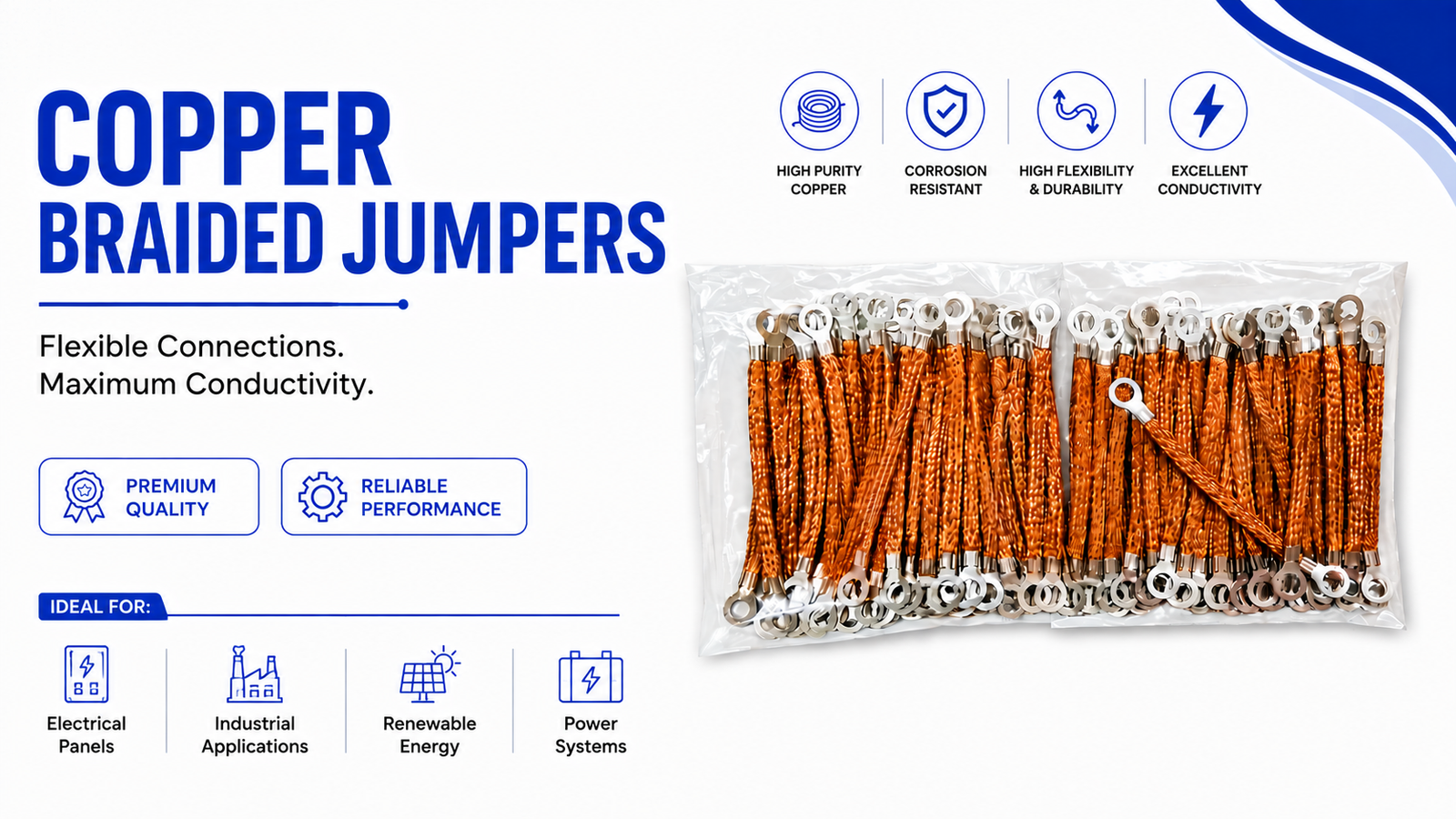
They are frequently found in switchgear, electrical panels, transformers, busbars, batteries, industrial machinery, grounding systems and power distribution equipment.
The combination of excellent copper conductivity and flexible braided construction makes copper braided jumpers an important component in many electrical installations.
What Is a Copper Braided Jumper?
A Copper braided Jumper is a flexible electrical conductor that is produced by braiding several copper conductors together. The ends may be provided with terminals, lugs or other connections as required for the use.
Copper braided jumpers are available in different:
They are made with bare copper or tinned copper to meet the electrical and environmental performance requirements.
| Specification | Details |
|---|---|
| Material | High-Conductivity Copper |
| Copper Grade | ETP / EC Grade |
| Wire Diameter | 0.10–0.30 mm |
| Width | 10–200 mm |
| Length | Customizable |
Why Are Copper Braided Jumpers Used?
Excellent Electrical Conductivity
Copper is one of the most commonly-used materials for electrical conductors due to its high conductivity.
Copper braided jumper is a flexible jumper that offers efficient electrical connection between two points.
High Flexibility
Flexibility is one of the major benefits of copper braided jumpers.
A solid copper bar can only take a limited amount of movement. On the other hand, a braided jumper is made up of many smaller strands that are able to slide around.
This enables the jumper to:
Vibration Resistance
Vibration can be experienced during operation in electrical equipment like transformer, motor, generator and industrial machines.
If a rigid electrical connection, it can pass mechanical stress directly to the terminals or components.
The copper braided jumpers can offer a more flexible connection which can help handle vibration and movement.
This is especially useful in equipment that has continual movement.
Reduces Mechanical Stress
Temperature can cause electrical components to shrink and expand.
A fixed connection can cause extra mechanical strain on terminal and connection stresses.
A flexible copper braided jumper allows some freedom of movement between the connected components and can help to reduce stress on the overall electrical assembly.
Useful for Grounding and Bonding.
Copper braided jumpers are commonly used for grounding/bonding.
They are capable of making an electrical connection between:
Common Applications of Copper Braided Jumpers
Electrical Panels:
Copper braided jumpers are available for in-panel grounding, bonding and flexible connections within electrical control panels and distribution equipment.
Switchgear:
Components which need flexible electrical connections can be found in switchgear assemblies. Braided jumpers allow for freedom of movement and vibration while still providing electrical continuity.
Transformers:
Vibration and thermal expansion are possible during operation for transformers. Copper connections are flexible, which can help to accommodate movement between components.
Busbar Systems:
Copper braided jumpers can be used to connect busbars to equipment, or for flexible connections between electrical components.
Battery Systems:
In battery installations, such as guided or unguided systems, where vibration and reliable electrical connections are desired, flexible copper jumpers can be employed.
Industrial Machinery:
Braided jumpers can be used in motors, generators, and other industrial equipment as a grounding, bonding and flexible electrical connection.
Grounding Systems:
Copper braid can offer flexible connection between the electrical equipment and the grounding point, which can be done by grounding and bonding.