

Although many electrical copper wires are constructed from a high-purity copper, they are not always actually 100% copper. Other elements or impurities are present in commercial electrical conductors and are very small in amount due to the process of refining and manufacturing.
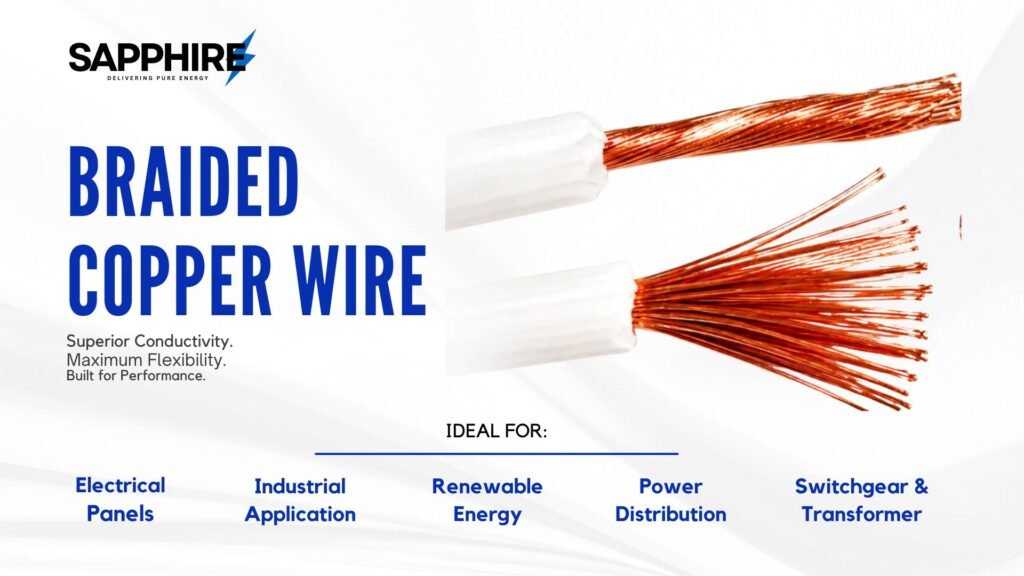
The exact composition varies according to the copper grade, manufacturing standard, application or conductor specification.
Due to its good electrical conductivity, ductility, thermal conductivity and corrosion resistance, copper is often used for electrical wires. These properties enable copper to be used in electrical wiring and cables, copper busbars and flexible copper jumpers.
How Pure Is Copper Wire?
Sapphire Busbar copper used for electrical conductors is normally of a high purity.
Copper is refined to nearly 99.9% (or as high as specified in the grade), for many electrical uses.The small portion can be very small amounts of elements or impurities.
So, it would be more appropriate to say that the most of the copper electrical wire is copper of high purity as compared to automatically saying 100% pure copper.
| Specification | Details |
|---|---|
| Material | High-Conductivity Copper |
| Copper Grade | ETP / EC Grade |
| Type | Solid / Stranded |
| Wire Size | Customizable |
| Insulation | PVC / XLPE / Silicone, as required |
Why Isn’t Copper Wire Always 100% Pure?
In practical manufacturing it is very difficult to obtain absolutely 100% elemental purity.
Other elements are present in trace quantities in commercial copper. These can develop as a result of:
These trace elements may influence properties like electrical conductivity, mechanical strength, hardness, corrosion.
Copper grades are carefully chosen by manufacturers for their electrical applications based on the desired combination of electrical conductivity and mechanical strength.
What Is Pure Copper Wire?
Pure copper wire is used to generally describe wire that is made with copper that has a very high copper content without considerable intentional alloying.
Commonly used where electrical conductivity is a major requirement.
Applications include:
The actual purity should always be checked with the manufacturer’s specification or the appropriate material standard.
Why Is Copper Used for Electrical Wires?
Copper is used extensively due to its desirable mix of properties.
Does Higher Copper Purity Always Mean Better Wire?
Not necessarily.For electrical applications, extremely high conductivity is also a key factor but the highest conductivity must also satisfy the following requirements:
It is important to know the specification of a copper conductor rather than just the purest possible product.
Frequently Asked Questions
High-purity copper generally provides excellent electrical conductivity, which is why it is widely used for electrical conductors. However, conductor size, temperature, construction, and connection quality also affect electrical performance.
Not necessarily. Electrical copper wire is generally made from very high-purity copper, but it may contain trace amounts of other elements or impurities. The exact composition depends on the copper grade and specificatio