

Sapphire busbars/Copper Flexible Jumpers are widely used in electrical systems where a reliable current-carrying connection is needed but must also handle real-world conditions like vibration, heat changes, movement, or slight installation misalignment. In many industrial setups, rigid connections simply don’t offer enough flexibility, which is where these components become extremely useful.
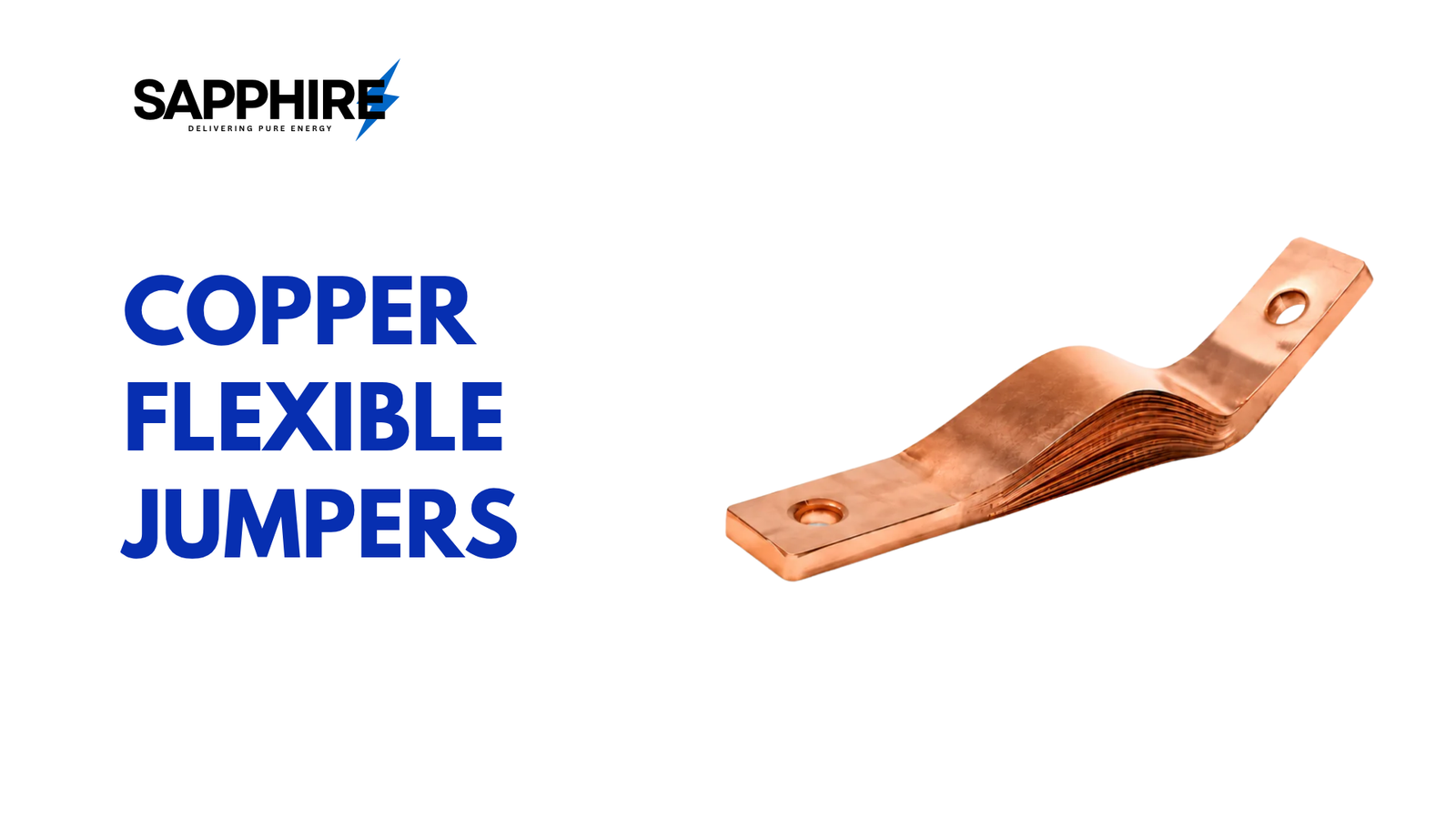
Unlike conventional rigid busbars, Sapphire busbar/flexible copper jumpers can bend and adapt easily to the space between electrical components. This makes installation smoother and helps reduce stress on terminals, especially in equipment that is constantly operating under load or vibration. Because of this adaptability, Copper Flexible Jumpers/Busbars are often preferred in demanding power distribution and industrial applications where reliability is critical.
What Are Copper Flexible Jumpers Copper Flexible Busbars?
A Sapphire busbar/copper flexible jumper is a type of electrical conductor used to connect two conductive points while still allowing a certain amount of movement between them. It is typically made from copper because copper provides excellent electrical conductivity along with strong thermal performance.
Unlike rigid copper busbars, flexible jumpers are designed with a different structure to provide flexibility.
A rigid busbar is usually made from a solid copper strip or bar, while a flexible jumper is built using materials such as:
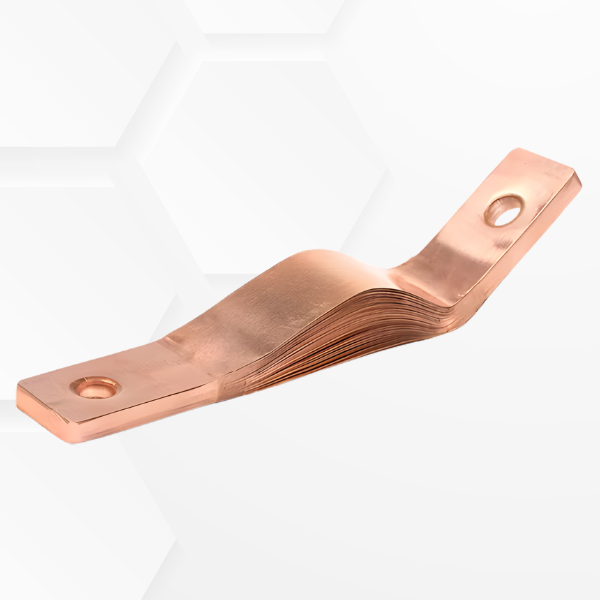
Because of this flexible design, the jumper can easily handle vibration, thermal expansion and contraction, as well as small shifts or misalignments in connected electrical components.
Why Are Copper Flexible Jumpers Used?
Electrical equipment doesn’t always stay perfectly still while it’s running. Machines like transformers, generators, motors, switchgear, and other industrial systems often vibrate, heat up, cool down, and slightly shift during normal operation.
If a rigid connection is used in these conditions, that stress gets directly transferred to the terminals and connected equipment, which can lead to wear or damage over time.
Copper flexible jumpers solve this issue by allowing the connection to bend and move slightly while still maintaining a strong and continuous electrical flow.
| Specification | Copper Flexible Jumpers / Flexible Busbars |
|---|---|
| Material | High-Conductivity Copper |
| Copper Grade | ETP / EC Grade |
| Length | As per requirement |
| Width | 10–200 mm (customizable) |
| Thickness | 0.2–10 mm (customizable) |
| Application | Switchgear, Transformers, Panels, Batteries & Power Systems |
Major Uses of Copper Flexible Jumpers/Busbars
1. Switchgear and Electrical Panels
One of the most common places where copper flexible jumpers are used is inside switchgear and electrical panel systems.
In switchboards and switchgear assemblies, different components often need to be connected in tight or limited spaces. In such cases, flexible copper connections make installation much easier compared to rigid busbars, which may require complex bending or extra clearance.
Copper flexible jumpers are commonly used to connect:
2. Transformer Connection
Transformers naturally experience vibration and temperature changes while operating. Because of this, their terminals need connections that can handle both mechanical movement and thermal expansion without stress.
Copper flexible jumpers are widely used between transformer terminals and other electrical parts to create a reliable and flexible current path.
Typical transformer uses include:
3. Battery Banks and Energy Storage Systems
Battery systems need strong and reliable electrical connections that can carry high current while fitting into compact spaces.
Copper flexible jumpers are commonly used to connect battery terminals, busbars, converters, and other high-current components.
They are especially useful in:
4. Grounding and Bonding Applications
Copper flexible jumpers are also widely used in grounding and bonding systems where electrical continuity must be maintained even when parts move slightly.
Common grounding and bonding uses include connections between:
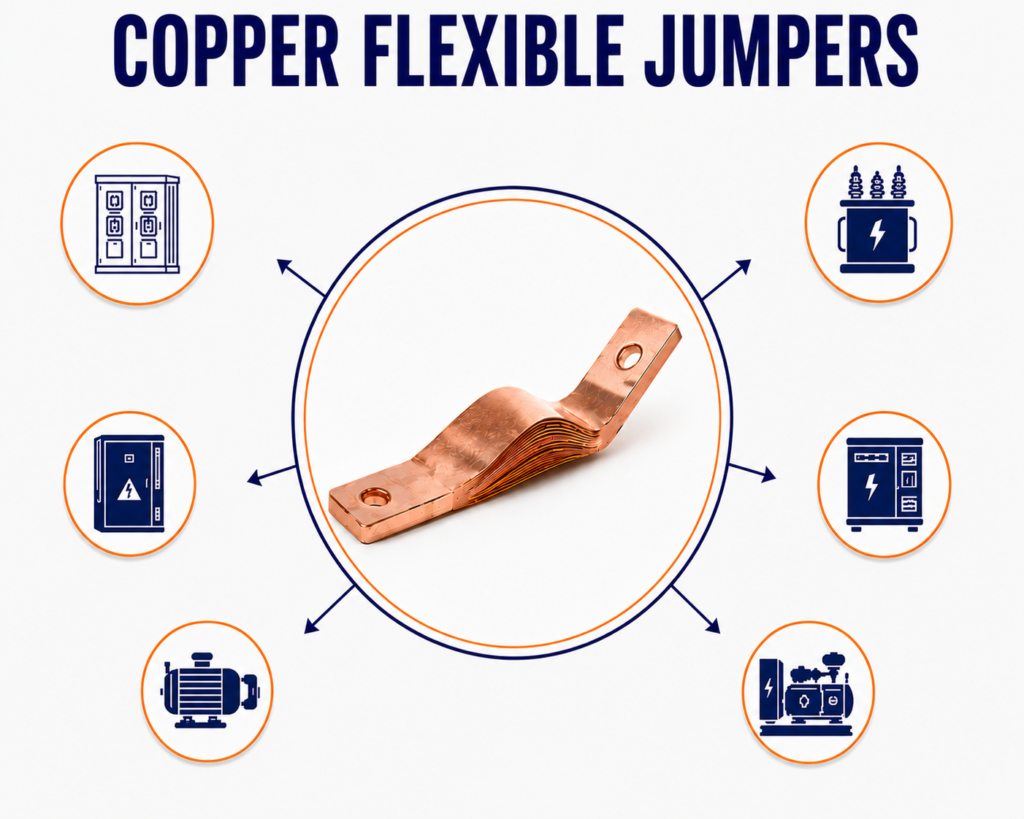
Applications of Copper Flexible Jumpers at a Glance
Copper flexible jumpers and busbars are used across numerous industries and electrical systems, including:
Frequently Asked Questions(FAQ)
Copper flexible jumpers can be used for grounding and bonding applications when they are correctly sized and designed for the applicable electrical requirements.
Copper braided jumpers are commonly used for flexible electrical connections, grounding, bonding, switchgear, transformers, motors, generators, and other applications where flexibility is required.