

Copper flexible jumpers, Good electrical connections are crucial to the safe and efficient operation of power and electrical equipment. Vibration, thermal expansion and contraction, mechanical movement and installation misalignment between the connecting parts are a normal operation condition.
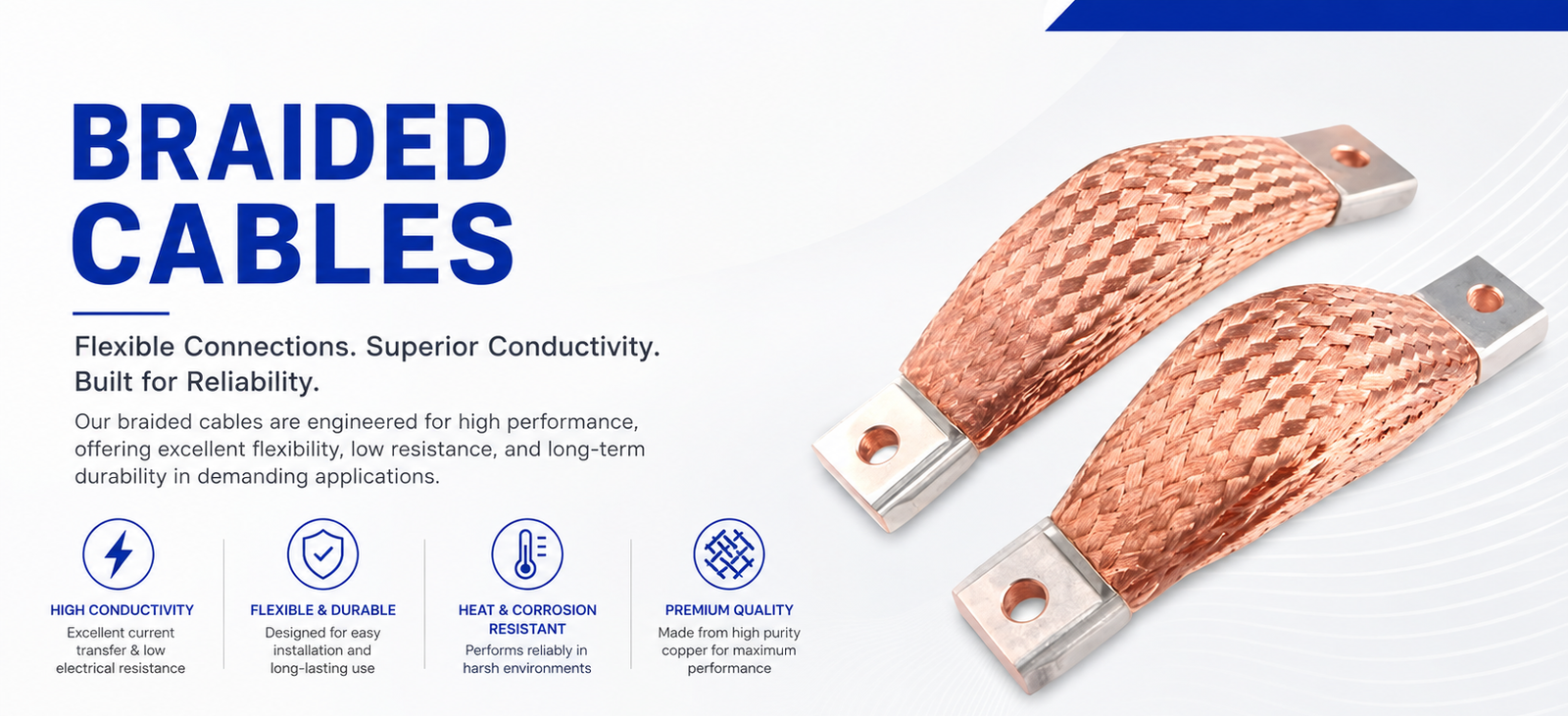
These forces can be transmitted directly to the terminals and connections via rigid conductors. Copper flexible jumpers offer a more flexible electrical connection that can flex a certain amount and still preserve electrical continuity.
Due to their high conductivity and flexibility, copper flexible jumpers are popular components in transformers, switchgear, electrical panels, batteries, EV Systems, solar systems, generators and industrial power systems.
How Do Copper Flexible Jumpers Improve Connection Reliability?
1. Reduce Mechanical Stress
The flexibility of your copper flexible jumpers means that they can easily handle mechanical movement.
A rigid conductor can transmit the force directly to the terminals when the moving parts of the connected components are moving.
A flexible jumper is able to bend and allow for some flexibility.
This can decrease the mechanical stresses to:
| Specification | Details |
|---|---|
| Material | High-Conductivity Copper |
| Copper Grade | ETP / EC Grade |
| Construction | Flexible Copper Braid / Laminated Copper Foils |
| Finish | Bare Copper / Tinned Copper |
| Flexibility | Excellent |
2. Accommodate Thermal Expansion
When carrying a current, electrical equipment heats up.
The copper conductors and associated components expand and contract as the temperature changes.
This thermal movement may cause stress to the inflexible electrical connections.
This can be very helpful in:
3. Handle Vibration
Even if the connection is not designed for movement, over time, vibration can impact electrical connections.
Vibration may occur continuously or intermittently in machinery like transformers, generators, motors, and industrial machines.
A copper flexible jumper can be used to vibrate with the equipment, without the need to transfer all the vibration to the terminal.
This can be useful to reduce mechanical fatigue and connection stability.
4. Ensure a Secure Connection of Parts
There must be mechanical stability to get an electrical connection going.
For connections that are exposed to mechanical movement repeatedly, the contact pressure may vary over time.
Well designed flexible copper jumpers can assist you to handle the movement of the components being connected and maintain electrical connection.
But the reliability of the connections is also dependent on:
Factors That Affect Connection Reliability
Installing copper flexible jumpers is just one aspect of a secure electrical connection.
Correct Sizing:
The jumper should be sized to accommodate the expected current and thermal conditions.
Proper Termination:
The design and installation of terminals and connection surfaces should be done right.
Correct Torque:
When the bolted connection is used, the connection should be tightened as per the manufacturer’s torque specification.
Clean Contact Surfaces:
Surface preparation, contamination and corrosion can cause high contact resistance.
Appropriate Flexibility:
The jumper should be fitted so that it is not bent or twisted.
Frequently Asked Questions
Copper itself has excellent conductivity, but the jumper’s total resistance depends on its size, length, construction, and termination. Properly designed connections can minimize unnecessary resistance and heating.
Braided copper construction combines good electrical conductivity with mechanical flexibility. This allows the jumper to accommodate certain vibration and movement while maintaining electrical continuity.