

Tinned copper busbars are copper busbars that are coated with tin as an added surface coating. They have superior electrical conductivity of copper and have better surface oxidation/corrosion resistance.
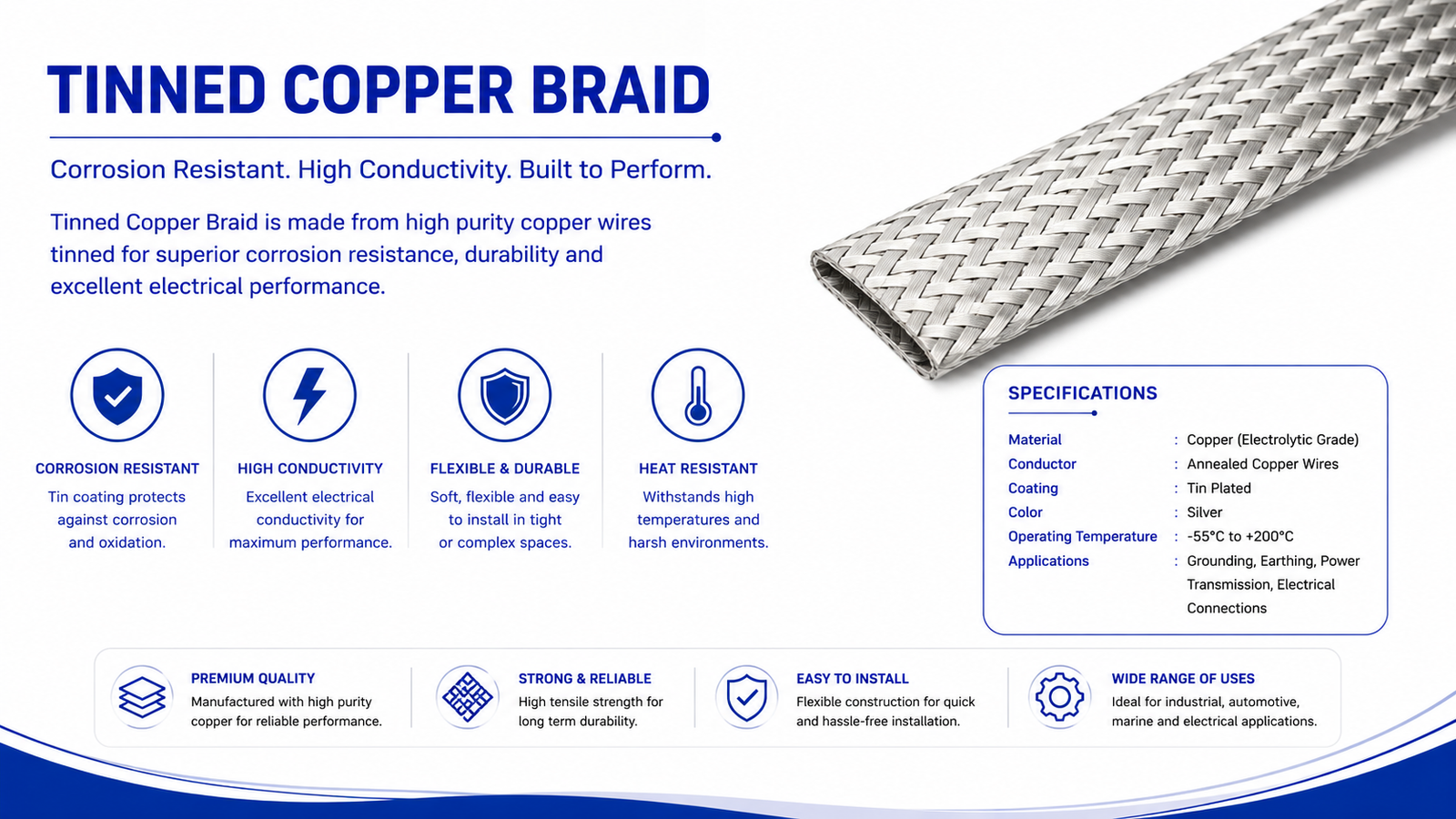
Therefore, tinned copper busbars are invaluable for use in situations where electrical connections are prone to moisture, humidity, condensation, salt air, and corrosive environments.
Typical applications include battery systems, marine electrical systems, renewable-energy systems, switchgear and electrical panels, EV systems, power distribution equipment, and industrial equipment.
What Are Tinned Copper Busbars?
The copper conductor with a protective layer of tin on the surface is called a tinned copper busbar.
The basic construction is:
Finishes and printing → conducts electricity
Surface coating with tin → metal protection of the copper surface
The copper offers the main electrical conductivity, and the tin coating prevents the surface from oxidizing and being affected by the environment.
There are a variety of tinned copper busbar products, such as:
| Feature | Tinned Copper Busbar | Bare Copper Busbar |
|---|---|---|
| Copper conductivity | Excellent | Excellent |
| Surface coating | Tin | None |
| Surface oxidation protection | Better | Lower |
| Moisture resistance | Better suited | More exposed |
| Marine applications | Highly suitable | Less suitable without additional protection |
| Battery applications | Highly suitable | Suitable in protected environments |
Where Are Tinned Copper Busbars Used
Common applications include:
Frequently Asked Questions
Yes, when the complete busbar assembly is appropriately designed and protected for outdoor environmental conditions. Tinning alone does not make a busbar weatherproof.
Yes. They are widely suitable for battery and energy-storage applications where compact, high-current electrical connections and surface protection are important.